Filters
Ski touring courses in Switzerland | Your safe introduction to the snow-covered mountains
Whether you’re taking your first steps on touring skis or want to deepen your knowledge of avalanche safety and route planning: in our ski touring courses, experienced Swiss mountain guides will teach you the necessary skills. Learn how to walk ergonomically, perform clean kick turns and make safe decisions in the terrain – for unforgettable and independent ski tours.

From piste skier to independent ski tourer: learning ski touring the systematic way
Ski touring opens up a whole new dimension to winter sports: tranquil, snow-covered landscapes, making your own tracks in deep snow, and summit experiences far from the hustle and bustle of the slopes. However, the transition from groomed slopes to alpine terrain requires a sound knowledge of ascent techniques, avalanche awareness and group leadership.
Our ski touring courses in Switzerland combine hands-on learning with authentic mountain experiences:
- Introductory ski touring courses & day courses: Ideal for anyone who’d like to give walking with skins and touring bindings a go, with no obligation.
- Basic ski touring courses (2 to 4 days): Comprehensive basic training for beginners. You’ll learn the most energy-efficient walking technique, how to perform clean kick turns on steeper terrain, how to use avalanche transceiver safety equipment, and the basics of snow and avalanche awareness.
- Advanced courses & coaching: For ski tourers who want to plan more challenging routes independently, refine their freetouring technique or venture into high-alpine terrain (ski mountaineering).
Ski touring course overview
The basic courses are for beginners and require little or no prior knowledge. The practical and advanced courses build on previous knowledge and therefore require prior knowledge.
Basic courses
Ski touring taster weekendSki touring and avalanche training courseBasic courseSki tour dayBasic course 1
AvalanchesBasic course 2
AvalanchesSki technique courseRefresh
Ski technique
Application courses
Avalanche training weekendSki mountaineering training courseIntroductory course for ski mountaineeringSteep skiing courseAdvanced courses
Ski mountaineering coaching courseFilter and search for your favourite tour!
Search
date
Technics
Endurance
Category
Ski mountaineering introductory and preparation course with application tour Allalin- and Strahlhorn
Your introduction to the high mountains on skis. Over the course of three days, you will learn the basics of how to ski safely on guided high-altitude ski tours and experience the world of 4000 metre peaks.TechnicsEndurance12 - 14 March 2027, Friday - Sunday, 3 days2–4 April 2027, Friday–Sunday, 3 days10–12 April 2027, Saturday–Monday, 3 days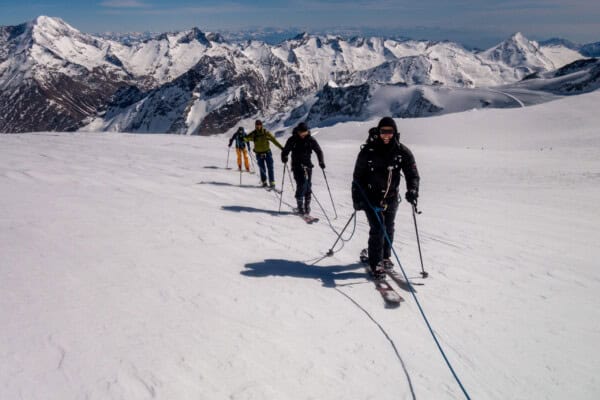
Allalin and Strahlhorn
Ski tours and avalanches | Simplon training weekend with mountain guide
Learn and deepen your knowledge in the various areas of ski touring, from ascent and descent to avalanche awareness.TechnicsEnduranceDaily, date on request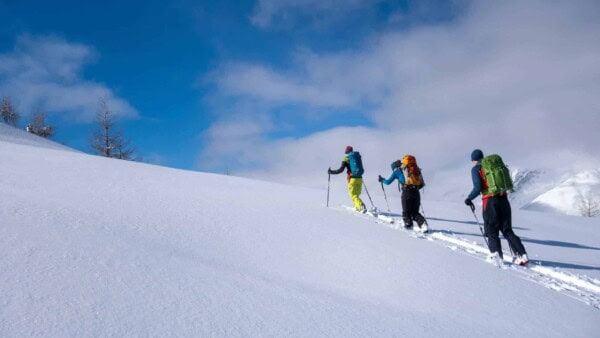
Simplon
Ski touring taster weekend Diemtigtal | Grimmialp in a hotel with mountain guide
We take you into the world of ski touring. You'll get a taste of this wonderful sport and we'll accompany you professionally on your first ski touring experiences.TechnicsEnduranceDaily, date on request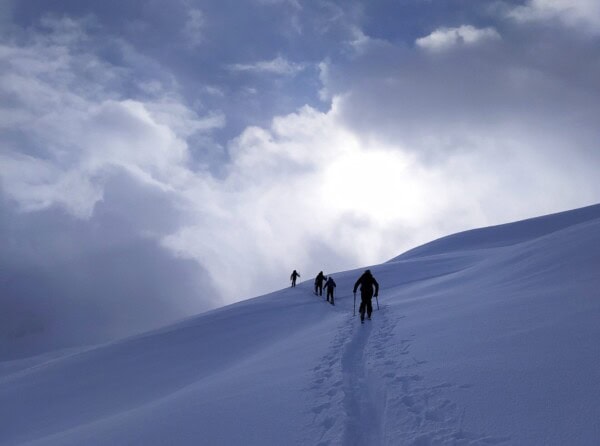
Grimmialp - Diemtigtal
- Download more offers!
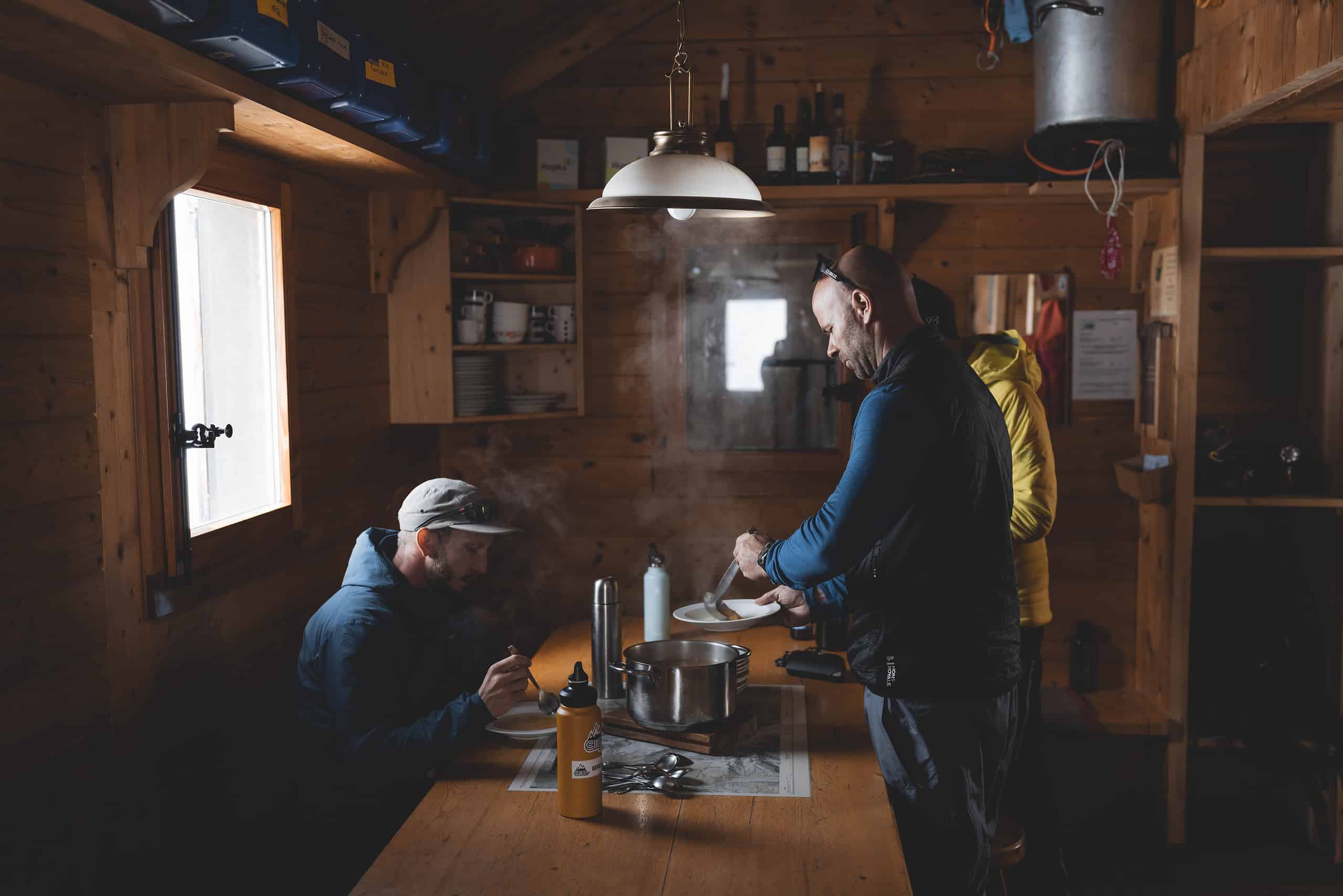
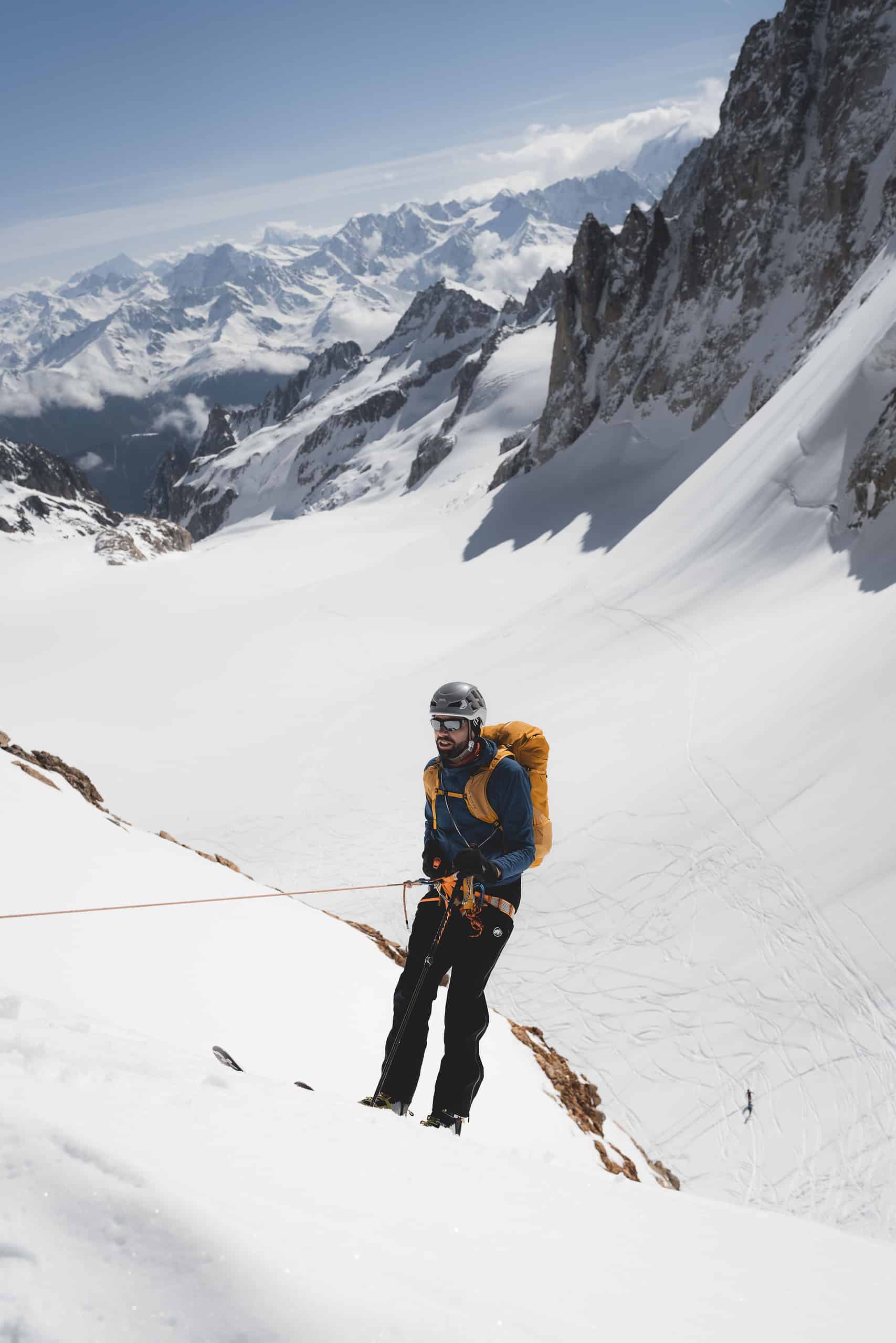
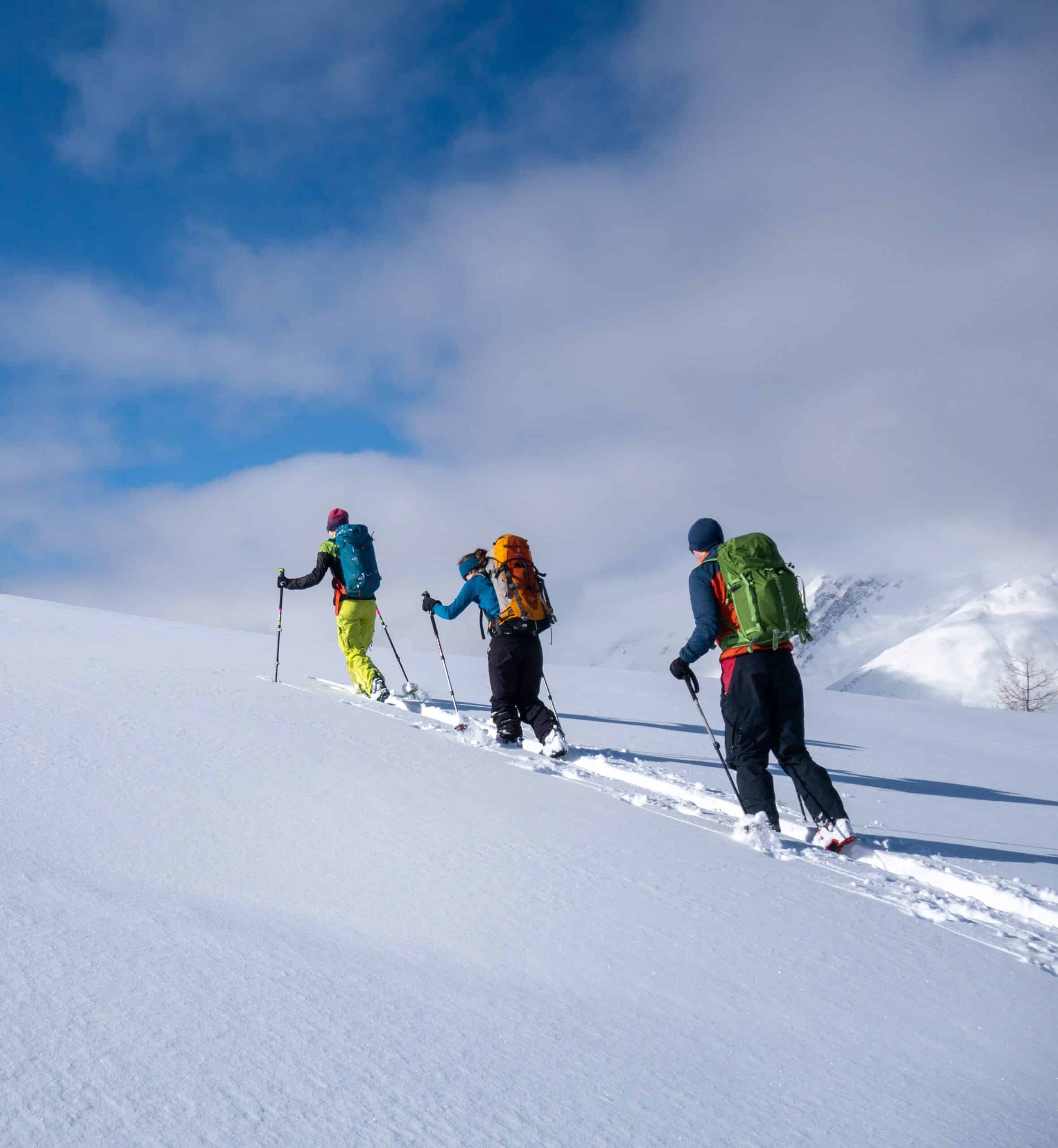
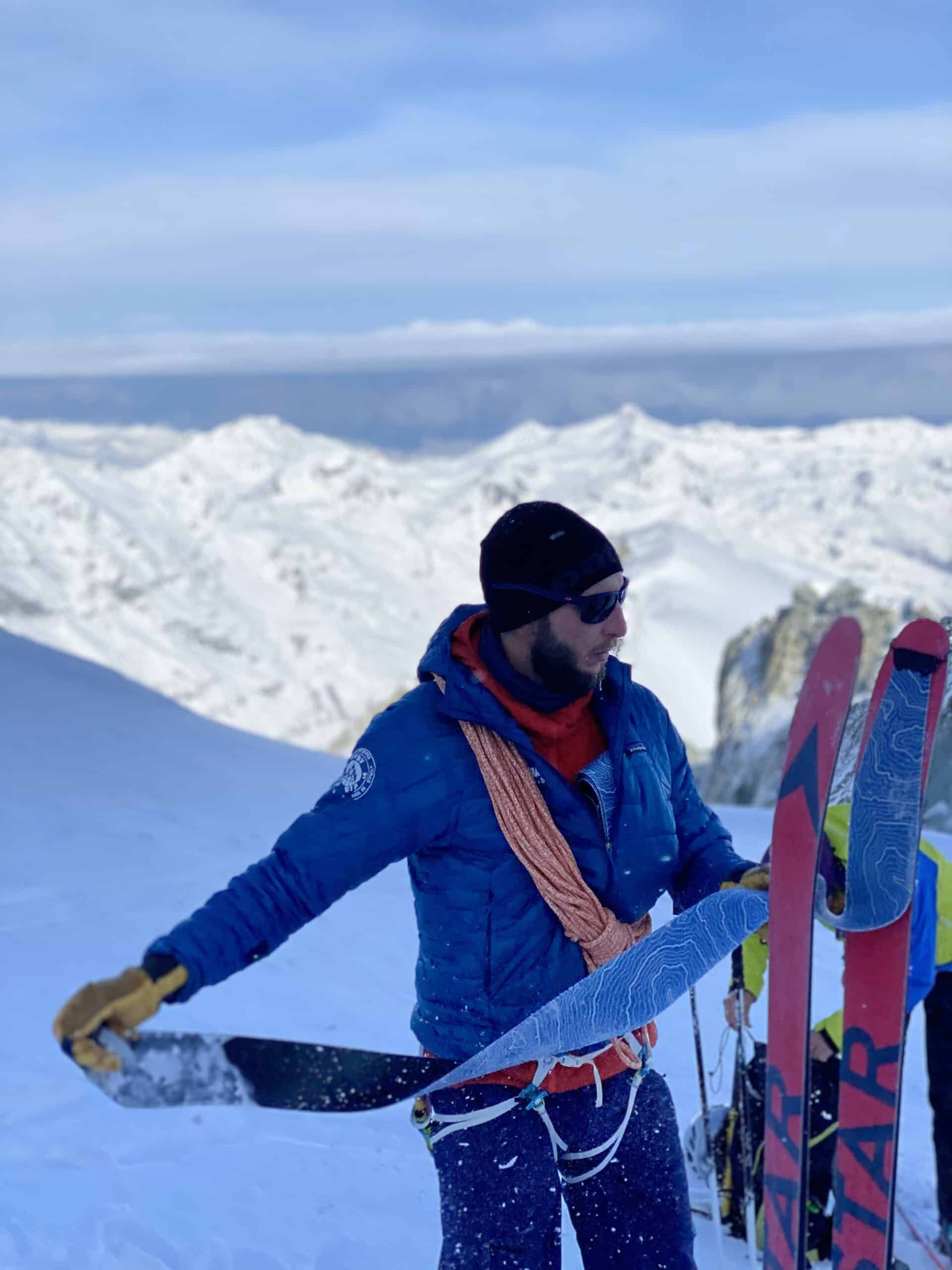
Impressions of ski touring courses
Interested in other tours?
Take a look at the complete offerNothing that suits you?
Do you prefer to travel in your own group? Book a private tour with us and enjoy and benefit from our professionals on the mountain.
Questions & Answers about ski touring courses – and how to master the hairpin turn without getting tangled up in the snow? ¿
Do I need to have some experience of off-piste skiing to take a beginner’s ski touring course?
No, you don’t need any prior experience of ski touring for our beginner and taster courses. The only important thing is that you can ski quickly and safely using parallel turns on groomed slopes (including red and black runs). We’ll learn everything else together from scratch – from sticking on the skins and walking with touring bindings right through to your first deep-snow descent.
How fit do I need to be for a ski touring course?
For our beginners’ courses, a good level of basic fitness is sufficient for around 2 to 3 hours of gentle uphill walking (approx. 600 metres of elevation gain). We maintain a steady, gentle pace, leaving plenty of time for explanations, breaks and tips on walking technique.
Can I take part in the ski touring courses with a splitboard as well?
Yes, splitboarders are very welcome on our courses! Some of our mountain guides regularly go splitboarding themselves and can give you specific tips on skinning, crampons and ascending techniques on a splitboard.
What is the difference between a taster weekend and a beginner’s course?
A taster weekend (2 days) is the perfect way for those who are curious to give the sport a go without committing too much time. A basic course (3 to 4 days) goes into much greater depth: as well as intensive training in ascending and descending techniques, we set aside plenty of time for practical exercises in avalanche victim search and rescue (AVS), snow assessment and independent tour planning.
What equipment do I need for the course, and can I hire equipment?
You’ll need a full set of ski touring equipment (touring skis with walking bindings, skins, crampons, adjustable poles, touring boots) as well as safety equipment (avalanche transceiver, shovel, probe). If you’re missing any equipment, you can easily hire it when you book or through our partner sports shops.
What will I learn on the course about avalanche safety?
Avalanche awareness is an integral part of every ski touring course. You will learn how to interpret the avalanche bulletin (SLF), identify hazardous areas in the terrain, choose the right route, and use an avalanche transceiver, probe and shovel correctly in an emergency.
Which (easy) ski tours are recommended for beginners?
There are numerous easy ski tours. There is a difficulty scale for ski tours. This ranges from easy (L) to extremely difficult (EX). This scale takes into account all the factors involved in a ski tour, such as gradient, length, severity, etc. You can find out more in the Overview from the SAC or in this PDF.
New has the SAC a tour portalin which many ski tours are described. You can filter by region and difficulty to get some ideas and possible tours.
Classic examples of easy tours are:
- the Stotzig First near Realp, Andermatt,
- the Chaiserstuel near the Banalp in the Engelberg Valley,
- the Fanenstock near Elm in Glarus or
- the Selun from the Churfirsten in Toggenburg.
What should beginners in particular pay attention to on ski tours?
- Avalanche danger: Beginners should stay on moderately steep terrain (below 30°). In more delicate avalanche situations, the catchment areas and run-off areas of possible avalanches must of course also be taken into account.
- WeatherIn poor visibility, orientation on ski tours is challenging. Make sure you are out in good weather.
- Tour selectionChoose an easy tour that is short enough for your fitness level. You can always improve.
- MindsetEnjoy the snow, be open to changes of plan and only go as far as you feel comfortable. It is always possible to turn back.
- Material: Bring good ski touring equipment and the necessary safety equipment.
If you feel insecure, you can always go to a our courses come or a guided ski tour connect.
What is learned in ski touring training?
In a ski touring training course you will be taught the necessary skills and knowledge to make ski tours safely in winter terrain. This includes:
- The walking technique with ski touring skis
- Energy-saving and ergonomic form of movement
- Hairpin bends
- Use of crampons
- Behaviour in an avalanche accident and use of avalanche transceiver, probe, shovel
- recognising and assessing the avalanche danger in the terrain
- The walking technique with ski touring skis
Should a theory evening be attended before the backcountry ski touring course?
The avalanche theory evening is useful but not compulsory in order to take part in a ski touring course. The theory evening imparts a lot of knowledge about the formation and assessment of avalanches, which is then taken up again in the field.
How well do I have to be able to ski for the ski touring course?
You need to be able to ski reasonably well in the resort. We will be ski touring off-piste and the snow is sometimes more difficult to ski.
Where can I find information on current conditions?
The internet is full of information on current ski touring conditions.
- The weather The best way to obtain them is via the apps from MeteoSwiss and SRF Meteo. Yet the text forecasts say much more than just the symbols.
- The expected amount of new snow can be accessed via the page of wePowder can be called up or in the Report on the current situation from the SLF can be viewed.
- The avalanche danger is released from the Swiss Avalanche Research Institute (SLF) forecast daily.
- The local snow situation can be seen via webcams that Snow maps from the SLF or satellite images. There are also numerous forums (Summit book, Hikr), where various people post tour reports. But these are always subjective and should be treated with caution. It often makes more sense to look at the photos.
Are there any recommended apps or tools for planning ski tours?
A good platform to plan ski tours is the Ski touring guru. Skitourenguru has a large data set of accurate ski tour tracks. These tracks are evaluated daily together with the current avalanche danger level and a risk per tour is calculated. Roughly, the risk analysis is based on the graphical reduction method (GRM). The steepness of the slope is linked to the avalanche danger level. In the higher danger levels, the entire slope and its runout areas are included. The results are presented in a modern way, with an interactive map and categorised by colour. The advantages of this tool lie in the quick analysis of possible ski tours in the desired region. Even if you don't know the area, you can quickly go through various tours. The ski tour guru is a powerful tool, especially when it comes to deciding which tour to take. In our experience, the ski touring guru is very useful in areas where you are not yet familiar with the area. The Ski Touring Guru is available in the whole Alpine arc, i.e. France/Italy, Switzerland and Austria plus South Tyrol. If you are going to a new area and you are looking for a selection of possible tours, you will find what you are looking for with the Ski Touring Guru. The ski tour guru has disadvantages when it comes to use. It does not replace detailed planning. You have to study the exact route yourself and verify in the terrain whether the bulletin corresponds to the prevailing conditions. If necessary, the tour must be adjusted. The tool can give you a false sense of security. The data are inaccurate, the bulletin is a prediction, you still have to use your own head and watch out for additional possible dangers.
Another very useful mapping tool is the White Risk App (Android, iOS) from the SLF. With this you can display the detailed map data of Switzerland, France and Austria and use them offline. Italy is unfortunately missing. The necessary layers, such as slope inclination, game rest zones and many more, can also be displayed.
Furthermore, the White Risk Platform a planning tool to go through the 3×3 of planning ski tours step by step. Many topics are also well presented in online lessons.
Where is it allowed to go ski touring?
In the Alps you can go ski touring everywhere except in the game rest areas, hunting bans (game protection areas) and national parks. The easiest and most up to date way to do this is via the Official Swiss Topo Map view.
A somewhat detailed explanation can be found at the SAC.
How do you dress properly for a ski tour?
Like everywhere else in mountain sports, the principle of the onion also applies to clothing for ski tours. You are often warm on the ascent, it quickly gets cold during breaks and the wind blows strongly on the descent. Basically, merino wool garments are ideal as a base layer. So it goes:
- For the legs: Long underwear and breathable, windproof ski touring trousers
- For the upper body: T-shirt, long underwear, jumper, warm jacket and wind and waterproof jacket.
- For the extremities: Thick and thin gloves, headband and cap, buff
We have for you a detailed packing list with packing tips compiled.
Which binding is recommended for ski touring?
Meanwhile, Pin bindings are standard for ski touring. We are big fans of the bindings from ATK from Northern Italy. But also the bindings from the Swiss manufacturer Fritschi are in tip-top condition. At Ruedi Mountain Sports the professionals will advise you. You're sure to find what you're looking for there! You are also welcome to discuss current material tips on tour with our guides.
How do you dry the skins after a ski tour?
Simply hang them up. In summer, it is best to store them with the nets.