
9.15 am, Brig railway station
Introductory course in clean and trad climbing in Cadarese with a mountain guide
Discover the authentic side of climbing in Cadarese! Learn, step by step, how to secure yourself using friends and nuts, how to climb cracks, and how to master your first trad lead routes.
Technics
Endurance
Cadarese, Italy
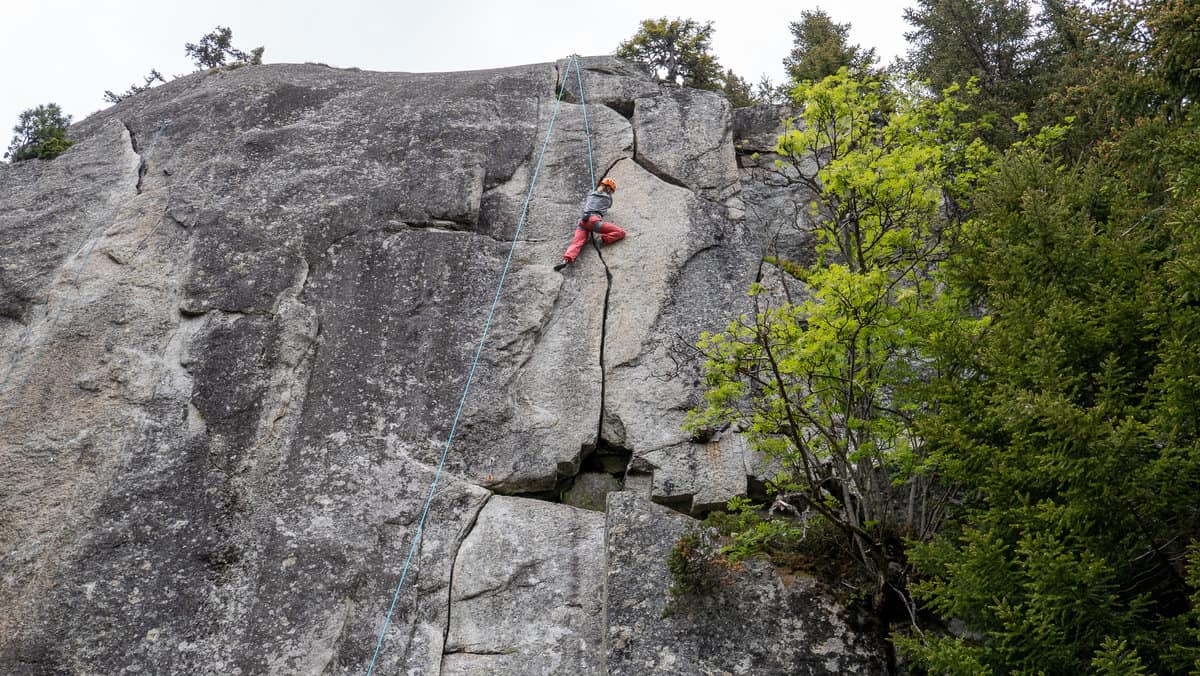
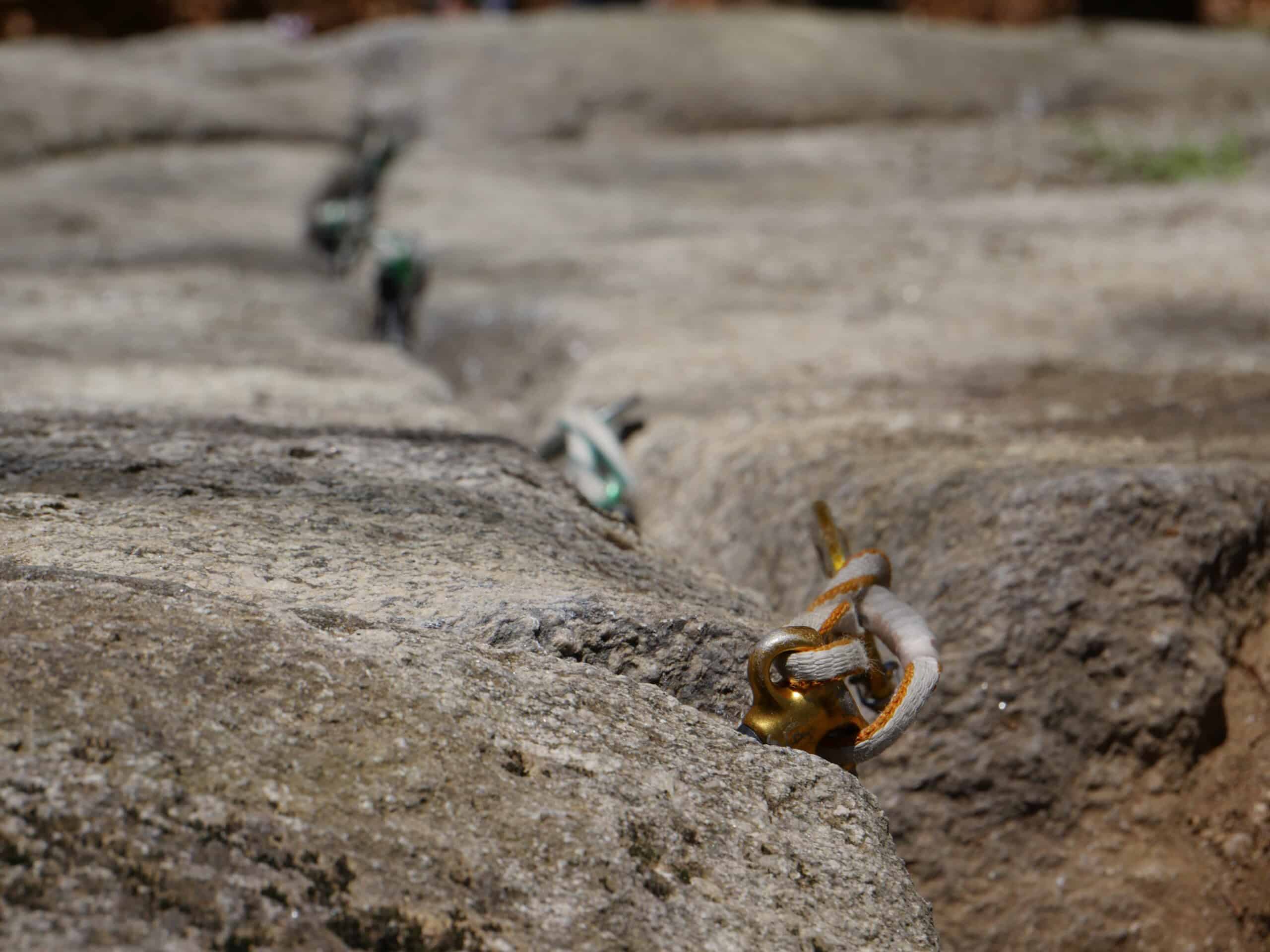
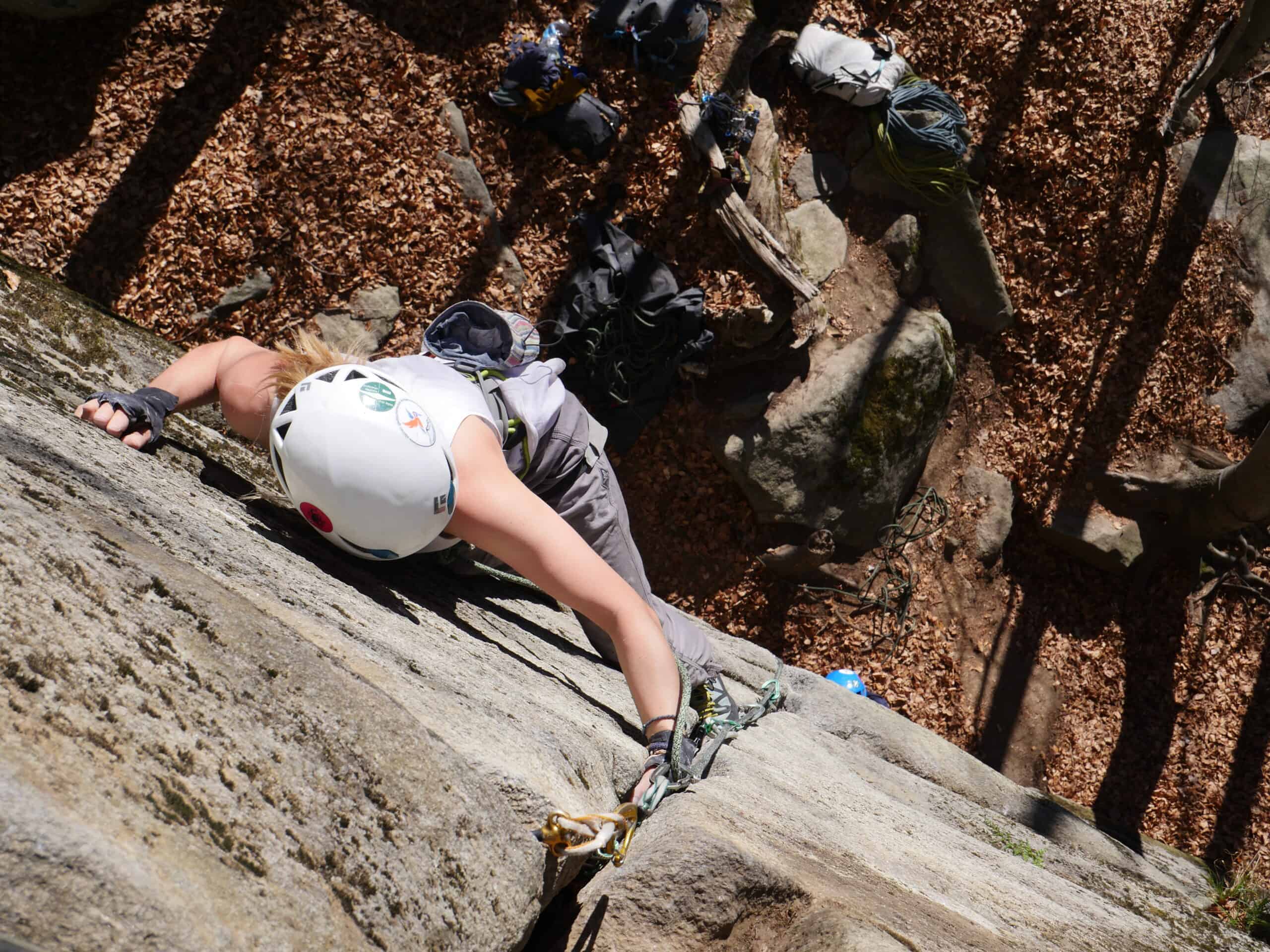
In alpine climbing, it is not only mastery of climbing technique that counts, but also the safe use of mobile belay devices. In our beginners’ course in Cadarese, you will learn these skills step by step. Following an introduction to equipment and belay station set-up, we’ll first practise placing and assessing friends and nuts on the ground. We’ll then put what we’ve learnt into practice on the rock and gain our first experience of lead climbing – initially in a controlled environment, and later with increasing independence. As the course progresses, we’ll venture into real trad lead climbing and also cover controlled fall training. In a safe environment, you’ll learn how to deal with a potential fall, how your belay system behaves and how to build confidence in your own placements.
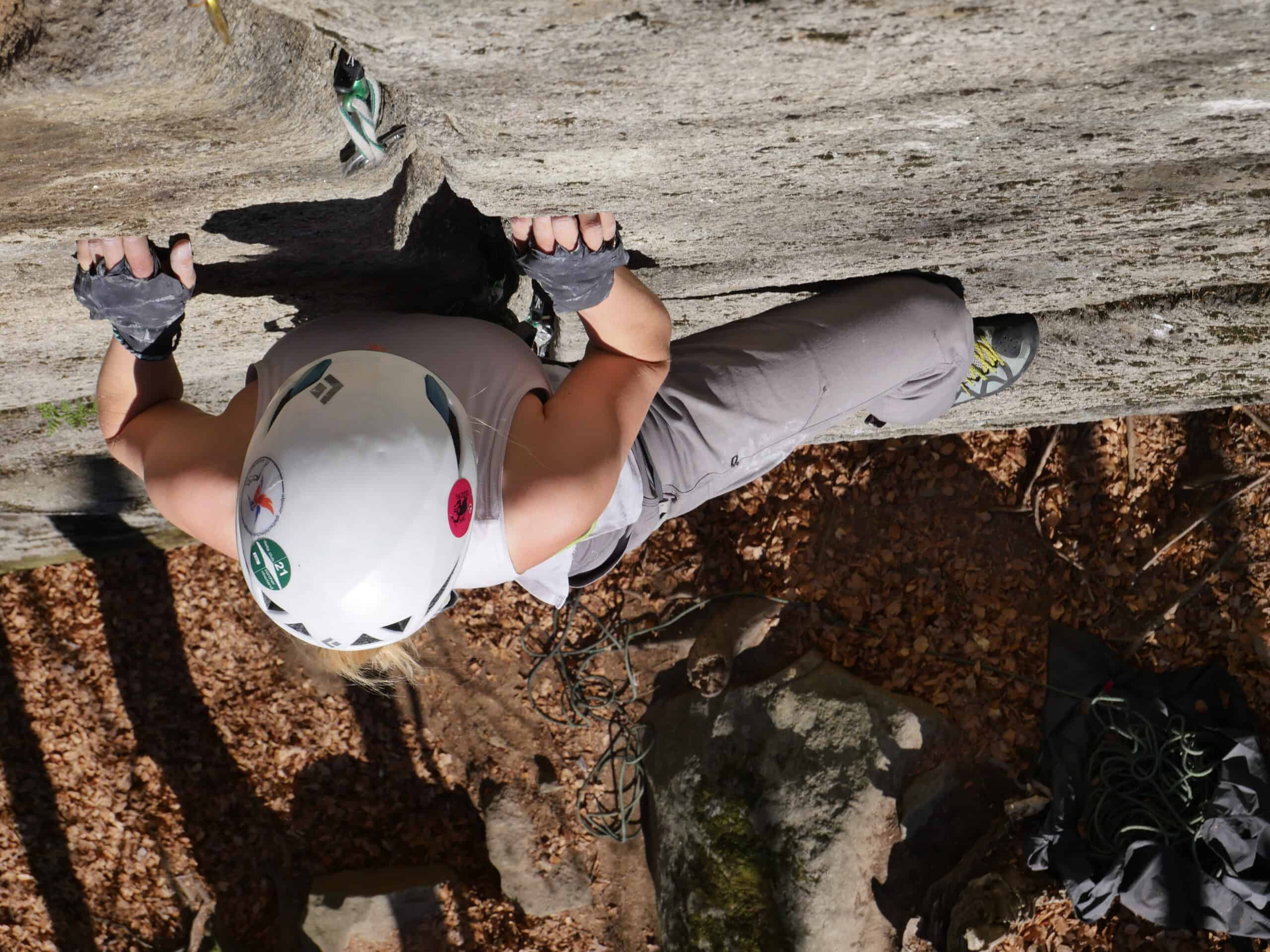
The area around Cadarese offers ideal conditions for getting started in the world of clean and trad climbing. The region is renowned for its high-quality granite, varied crack climbing and easily accessible climbing areas. The manageable approaches and the variety of routes allow us to familiarise ourselves with different crack structures, practise basic crack climbing techniques such as hand and foot jams, and apply what we’ve learnt directly on the rock. This way, you’ll learn to adapt your movements and belaying to the width of the crack in question. On one day of the course, there’s the option to head to Palma, which is around 30 minutes away. There, we’ll find different crack structures and climbing areas that offer additional training opportunities. Even in changeable weather, we can practise on the rock in Cadarese, as many routes are sheltered by natural rock overhangs. This allows us to tailor the exact choice of area and routes to the conditions and the group’s ability.
At our bed and breakfast Sentiero Verde in Formazza We also have cosy accommodation where we can wind down together after the intensive course days and recharge our batteries for the next day’s climbing.
Procedure and meeting place
We’ll be meeting in Brig. If possible, let’s carpool and get to know each other on the way there. Please let us know when you register whether you’re coming by car or not.
After driving over the Simplon Pass, we arrive in Cadarese and begin with an introduction to the world of clean and trad climbing. On the first day, the focus is on getting to know the equipment, developing a feel for mobile anchors and practising the basics step by step in a practical setting.
We make a point of taking the time to practise the various techniques. After all, clean and traditional climbing is not just about placing friends and nuts correctly, but also about being able to assess their quality and reliability.
Daily destination
You know your equipment, can set up and assess mobile anchors independently, and have grasped the key basics of climbing without bolts.
Course content
Materials science
- Friends, wedges and other mobile belay devices
- How it works and areas of application
- Correct insertion and removal
- Assessment of work placements
Site selection
- The basics of stand construction
- Series connection and balancing anchorage
- Work stations with mobile safety devices
- Directions of loading and assessment of the anchorage
Belaying and rope handling
- The basics of securing
- Rope handling and communication within a rope team
- Important rope commands
First practical exercises
- Placing and assessing portable safety barriers on the ground
- Developing your own investment portfolio
- Simple climbing sequences with mobile belays
On the second day, the focus is on putting what we’ve learnt into practice whilst climbing. We’ll start by practising lead climbing in a carefully controlled environment.
The focus here is on reading the rock, identifying suitable placements and placing your protection deliberately. You’ll learn to make decisions whilst climbing and to integrate your protection points sensibly into the route.
Daily destination
You can lead climb a simple route, identify suitable placements and place and assess your portable anchors independently.
Course content
Lead climbing with mobile anchors
- Reading the route and identifying suitable placements
- Placing friends and wedges whilst climbing
- Assessing the quality of the backup
- Safety distances and positioning
- Independent climbing in a controlled environment
Anchor point & rope management
- Anchorage point using mobile anchors
- Cable routing and cable management
- Transition from leading to following
Crack climbing techniques
- Identifying basic crack patterns
- Hand and foot clamps
- Movements at different crack widths
- Combining climbing techniques and belaying
In the evening, we discuss the day’s experiences and plan the next day’s climbing together.
Today we’ll put what we’ve learnt into practice on a real lead climb.
We choose routes that suit your current ability and work towards greater independence step by step. It’s not about climbing a route as quickly as possible, but about making good decisions and developing confidence in your own belays.
Depending on your ability and the route, we’ll also be refining the various crack-climbing techniques and working on your personal repertoire of moves.
Daily destination
You’ll gain your first experience of real trad lead climbing and build confidence in using mobile protection – both whilst climbing and when assessing your own placements.
Course content
Trad lead climbing
- Solo climbing with portable belay devices
- Placing gear whilst lead climbing
- Decisions under pressure
- Reading routes and choosing a climbing line
- Continuously assess the quality of safeguards
Crack climbing
- Techniques for different crack widths
- Hand, fist and foot clamps
- Body position and efficient movements
- Using climbing techniques effectively
Reflection
What went well?
Where do uncertainties arise?
Which placements give you confidence?
In which areas would you like to develop more of a routine?Before we head back home today, we’ll be looking at a topic that’s particularly important in trad climbing: how to manage a fall in a controlled manner.
Together, we’ll create a safe environment in which you can approach the subject step by step. It’s not about taking the most spectacular falls possible, but about gaining experience and developing confidence in the belay system, your placements and your own reactions.
Daily destination
You have gained some initial experience of controlled falls in traditional climbing and are now better able to assess how to deal with a potential fall and the decisions that go with it.
Course content
Fall training
- Fall scenarios in a controlled environment
- What to do before, during and after a fall
- Dynamic backing up
- Building confidence in the safety system
- Assessment of the security chain and placements
Crack climbing
- Different crack widths
- Appropriate clamping and movement techniques
- Application of the technique to various types of cracks
Application
To round off the course, we’ll bring together the various elements of the course. You’ll have the opportunity to apply what you’ve learnt as independently as possible and receive personalised feedback from our mountain guide.
At the end of the course, we’ll set aside some time for a joint review:
What have you learnt?
Where do you already feel safe?
Which techniques would you like to practise further?
What’s your next goal in clean and trad climbing?Afterwards, armed with lots of new experiences and a valuable toolkit for trad climbing, we’ll travel back to Brig together and then on to our respective homes.
Requirements
- You have gained experience on multi-pitch routes and are familiar with the following rope handling and techniques:
-
- Stand construction
- Securing with ATC, Tuber etc.
- Abseiling technique
- Communication as a rope team on an MSL route
-
- We climb in the 4th and lower 5th difficulty ridge (4a-5a) depending on the ability of the participants. The focus is on training and not on the level of difficulty.
- Condition for climbing tours with a comfortable ascent and descent.
- You have gained experience on multi-pitch routes and are familiar with the following rope handling and techniques:
Price and services
- CHF 1190.-
- Small group with 4 - 6 guests per mountain guide.
- Includes accommodation in a beautiful flat with a 2–4-bed room.
- Breakfast included.
- Including planning and realisation with mountain guide and his travel expenses.
- CHF 1190.- Exclusive:
- Individual journey to Brig
- Dinner in neighbouring restaurants.
- Travel expenses or taxi, if applicable
Material and equipment
- For this tour you need the material from this PDF. We carry our equipment with us the whole time. Only pack the essentials.
Bergschaft tours and courses are conducted in German as standard. However, our mountain guides speak good English, as do many of the participants. If you speak English, you are of course very welcome. Depending on the tour, it may be worth asking us in advance whether the guide and the group are comfortable speaking English.
If you have any questions, please feel free to contact us, preferably via the Contact form.
Highlights: Introductory course in clean and traditional climbing


Here’s how to join us for clean and trad climbing in Cadarese:
- 26–29 November 2026, Thursday–Sunday, 4 daysNur noch 5 freie Plätze, mit 3 weiteren Buchungen ist die Durchführung gesichert.
 Mountain guideCHF 1,190

As Private Tour on your desired date with your group:
As Voucher give your favourite as a gift:
Next highlights
One-day course on deep snow and skiing techniques with a mountain guide
To the offerSunday, 22 November 2026Introductory course in clean and trad climbing in Cadarese with a mountain guide
To the offer26–29 November 2026, Thursday–Sunday, 4 daysSki technique course with a mountain guide | Saas Fee
To the offer27 - 29 November 2026, Friday - Sunday, 3 days- to the offers
All last minute offers