
Filters
Traditional Climbing, Clean Climbing & Crack Climbing: Your Guide to Self-Belaying Routes
Climbing in its purest form: no bolts, just you, the rock and your portable protection. Whether you’re placing Friends and nuts for clean climbing or learning the perfect jamming technique for steep cracks – our mountain guides will be with you every step of the way. Learn to trust your own gear, broaden your horizons in traditional climbing and experience genuine adventures on the vertical face. Safely, expertly and as part of a strong rope team.
Climbing course overview
The basic courses are for beginners and require little or no prior knowledge. The application courses are advanced and require corresponding prior knowledge (see the course description in each case).
Basic courses
Basic course climbing gardenClimbing days TicinoIndoor technologyOutdoor technologyMental and fall trainingBasic multi-pitch climbing courseRidge climbing in alpine terrainBasic course in clean and crack climbing
Application courses
Advanced course + refresher multi-pitch courseClean and crack climbingApplication tours
SalbitMotörheadPiz BadileClimbing trips
SardiniaCalanquesClean and climbing trip Dolomites + TradFilter and search for your favourite tour!
Search
date
Technics
Endurance
Category
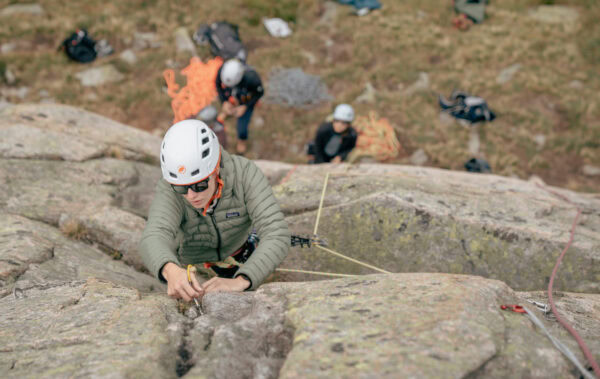
Introductory course in clean and trad climbing in Cadarese with a mountain guide
Discover the authentic side of climbing in Cadarese! Learn, step by step, how to secure yourself using friends and nuts, how to climb cracks, and how to master your first trad lead routes.TechnicsEndurance26–29 November 2026, Thursday–Sunday, 4 days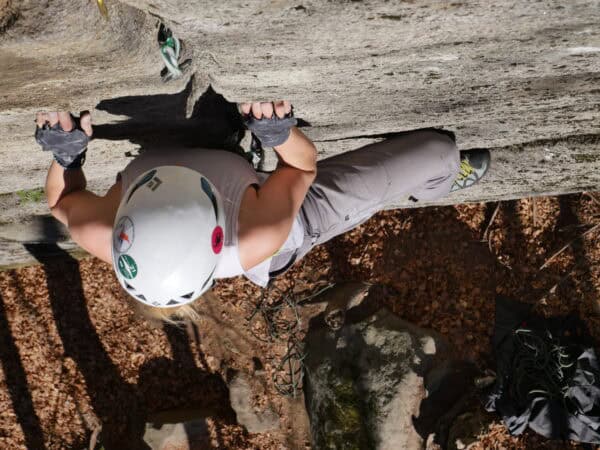
Cadarese, Italy
Basic course clean and trad climbing mountain lake | training and application days with mountain guide
Immerse yourself in the originality of climbing and take the plunge into alpine multi-pitch routes! Discover trad climbing from the ground up and learn to climb safely and cleanly without bolts.TechnicsEndurance25–27 June 2027, Friday–Sunday, 3 days9–11 July 2027, Friday–Sunday, 3 daysand other data.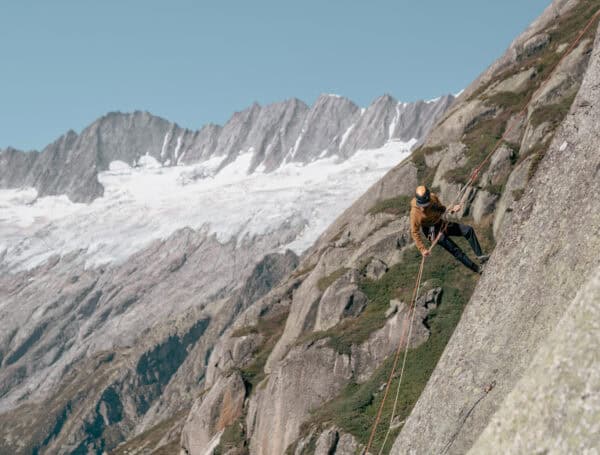
Mountain lake hut, Uri
Basic course clean and trad climbing Lower Valais | training and application days with mountain guide
Immerse yourself in the originality of climbing and take the plunge into alpine multi-pitch routes! Discover trad climbing from the ground up and learn to climb safely and cleanly without bolts.TechnicsEnduranceDaily, date on request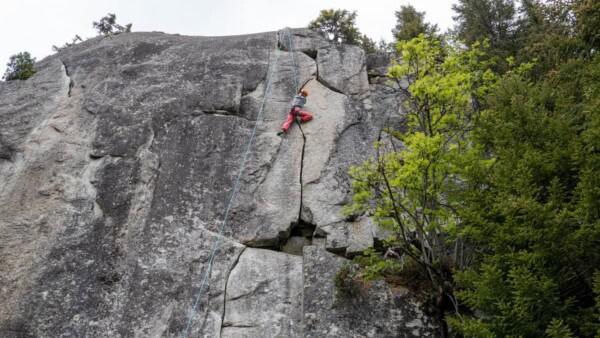
Lower Valais
Introductory course in clean and trad climbing in Eastern Switzerland with a mountain guide
Immerse yourself in the originality of climbing and take the plunge into alpine multi-pitch routes! Discover trad climbing from the ground up and learn to climb safely and cleanly without bolts.TechnicsEnduranceDaily, date on request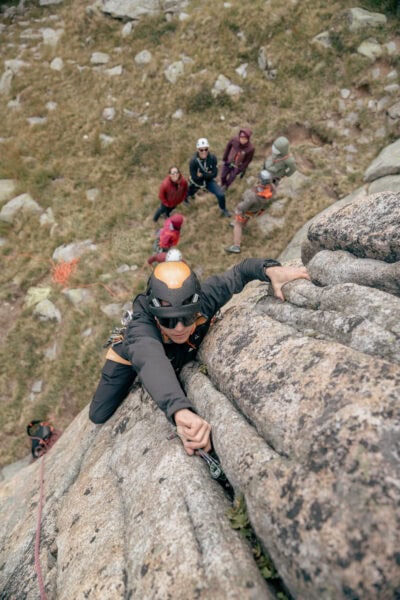
Tierwies, Eastern Switzerland
- Download more offers!
Scenes from traditional and crack climbing: When the Friend is perfectly placed


Interested in other tours?
Take a look at the complete offerNothing that suits you?
Do you prefer to travel in your own group? Book a private tour with us and enjoy and benefit from our professionals on the mountain.
Questions and answers about crack climbing and how to learn to trust your Friends? ¿
General
What are the entry requirements for a trad climbing course?
You should be able to lead climb safely at a climbing centre (approx. grade 4a–5a) and have sound experience of belaying. Some experience of multi-pitch climbing is essential in order to take part in the course. We’ll teach you the specific crack climbing and belaying techniques using mobile gear from the ground up.
Which climbing shoes are best suited to crack climbing?
It’s best to leave your extremely asymmetrical, heavily downturned bouldering shoes at home. For cracks, you need flat, comfortable shoes with a fairly straight profile and a stiff sole, which you can wedge into the rock fissure without any discomfort.
Material and equipment
What exactly is a „Friend“?
A Friend (often also called a Camalot, or ‘Cam’ for short) is a portable intermediate anchor. When you pull the small lever, the four clamping jaws close together. If you place it in a rock crack and let go, the jaws spread apart under spring tension. As soon as a load (e.g. a fall) is applied to the Friend, it locks itself securely into the rock.
What is the difference between a wedge and a Friend?
Climbing wedges are passive protection devices with no moving parts. They are placed in rock fissures, which ideally narrow towards the bottom, and are wedged in place by pulling them downwards. Friends are active devices and, unlike wedges, can also be used in completely parallel cracks.
Do I need to bring my own Friends and wedges?
No, we’re happy to provide you with all the necessary equipment for our basic courses. If you already have your own mobile belay devices, please do bring them with you – it’s most effective to practise with the equipment you’ll later be using on your own harness.
Do I need special split-finger gloves, or is tape enough?
It’s a matter of personal preference! Specialised crack gloves offer instant protection and excellent grip, particularly for those new to crack climbing. The classic tape wrap is more flexible and often more comfortable on very narrow cracks. On the course, we’ll show you exactly how to tape your hands perfectly.
Technology and Safety
Hand clamps, fist clamps, the Piaz technique – what do they all mean?
When climbing cracks, you rarely hold onto traditional ledges and holds. You use your body: for a finger jam, you spread your hand wide inside the crack; for a fist jam, you use your clenched fist to wedge yourself in. The Piaz technique (counter-pressure technique) is often used on crack edges – here, you pull on the edge with your hands whilst pressing against it with your feet, relying entirely on friction.
How can I tell if the material I’ve laid will actually hold?
We’ll teach you how to „read“ the rock (sound, texture, rock quality) and find the perfect angle for placing nuts and cams. You’ll learn how to carry out a thorough visual inspection and how to test the gear with a firm, targeted tug before continuing your climb.
What happens if a friend or a wedge gets stuck in the rock?
Then it’s the climber’s turn! With a special tool – the wedge remover (Grübler) – and a bit of patience, almost any material can be freed. The clever, “clean” method of retrieving protection is just as much a part of the course as placing it in the first place.