
Filters
Climbing: Your journey up the rock face with a Swiss mountain guide
Swap plastic holds for rough rock and feel the sun on your skin. When climbing and sport climbing outdoors, you’ll experience nature from a completely new perspective. Whether you’re taking your first moves on the rock, want to learn how to lead climb safely, or dream of airy multi-pitch routes – our mountain guides will be there to support you. We’ll teach you sound climbing techniques, solid safety knowledge and give you the confidence you need so that you can concentrate fully on finding your flow on the vertical face.

Climbing course overview
The basic courses are for beginners and require little or no prior knowledge. The application courses are advanced and require corresponding prior knowledge (see the course description in each case).
Basic courses
Basic course climbing gardenClimbing days TicinoIndoor technologyOutdoor technologyMental and fall trainingBasic multi-pitch climbing courseRidge climbing in alpine terrainBasic course in clean and crack climbing
Application courses
Advanced course + refresher multi-pitch courseClean and crack climbingApplication tours
SalbitMotörheadPiz BadileClimbing trips
SardiniaCalanquesClean and climbing trip Dolomites + TradFilter and search for your favourite tour!
Search
date
Technics
Endurance
Category
Gastlosentürme climbing route | Traverse with a mountain guide
The Gastlosen mountain range along the border between the cantons of Bern and Fribourg is a sight to behold, with its towering limestone peaks and vertical rock faces.TechnicsEnduranceDaily, date on request
Selun south pillar
Sharp limestone, wonderful views of Lake Walen and great and lonely climbing in 4th grade!TechnicsEnduranceDaily, date on request
Deubergrat at Bockmattli | Traverse from the Grosser Turm
The most beautiful mountain on Zurich’s doorstep: an impressive yet straightforward traverse along the Deubengrat in rugged surroundings!TechnicsEnduranceDaily, date on request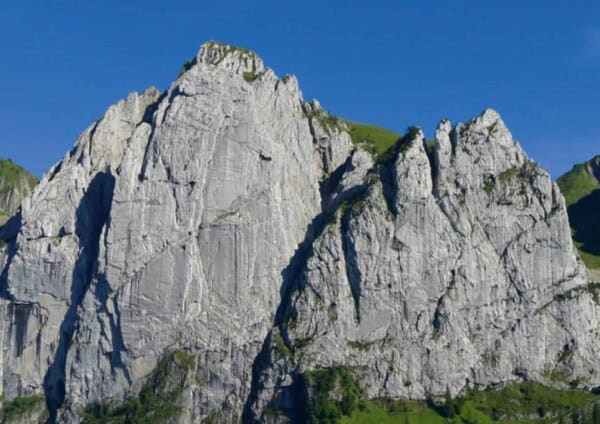
Bockmattli crossing
Crossing the Rotstock on the Eiger | A spectacular scrambling tour with a mountain guide
One of the most beautiful and scenic alpine scrambling routes around the Eiger.TechnicsEnduranceDaily, date on request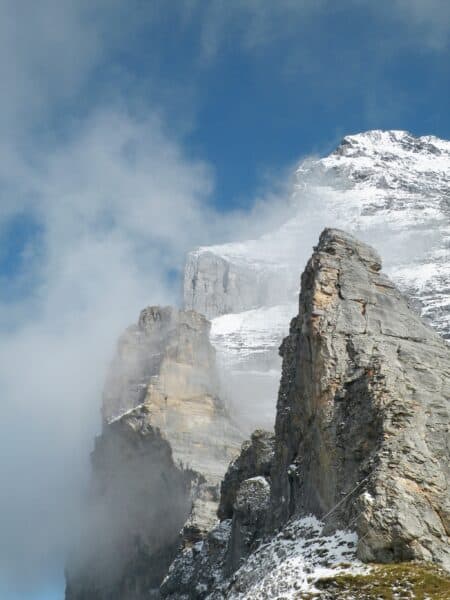
Grindelwald, Bern
Mountain hike: Schächentaler Windgällen | Crossing the west ridge with a mountain guide
One of the most beautiful alpine mountain tours in Central Switzerland: via the exposed western ridge, we reach the Windgällen in the Schächental and enjoy varied climbing, an alpine atmosphere and a fantastic view over the Uri Alps.TechnicsEnduranceDaily, date on request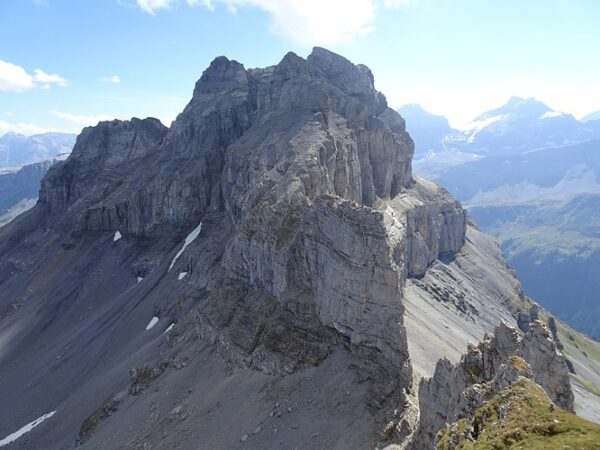
Teufelstalwand Climbing Route | In the Spirit of Friendship
Solid granite, varied climbing and spectacular views down into the depths make «Im Zeichen der Freundschaft» one of Switzerland’s great multi-pitch classics.TechnicsEnduranceDaily, date on request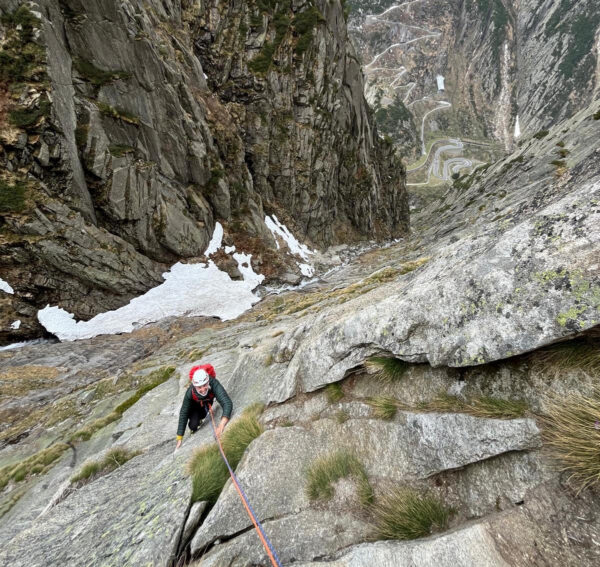
Rock climbing taster day | First rock climbing experience with a mountain guide
Discover the fascination of rock climbing with us! On this taster day, you will gain your first experience on the rock - without any previous knowledge, safely in the toprope and with lots of fun.TechnicsEnduranceDaily, date on request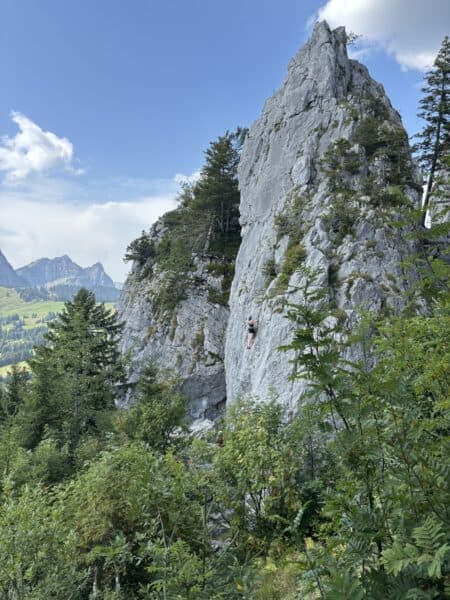
Eastern Switzerland
Central Switzerland
Law
Bern regionBasic course multi-pitch Wiwanni | training and application tours with a mountain guide
Pitch after pitch in the best granite - learn multi-pitch climbing around the Wiwannihütte with breathtaking views and take the plunge from the climbing garden to the wall!TechnicsEnduranceDaily, date on request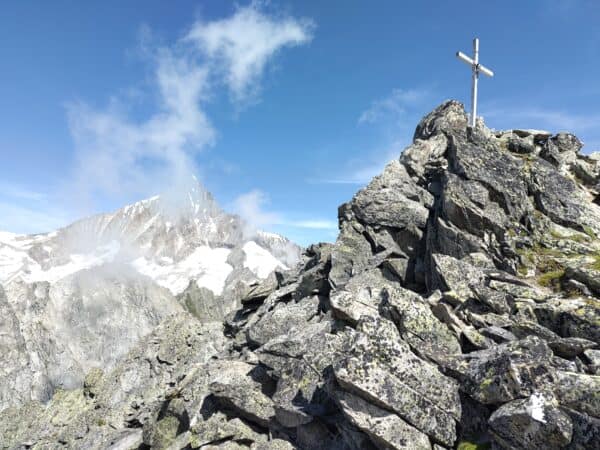
Wiwanni, Valais
Crossing the Kreuzberge VII to V
Impressive and excellent ridge climbing over three Kreuzberge mountains high above the Rhine Valley.TechnicsEnduranceDaily, date on request
Climbing Tour | Salbit South Ridge with Mountain Guide
One of the most beautiful ridge climbs on the finest Uri granite, graded 5. A spur-of-the-moment climb on Friday in glorious late-summer weather!TechnicsEnduranceDaily, date on request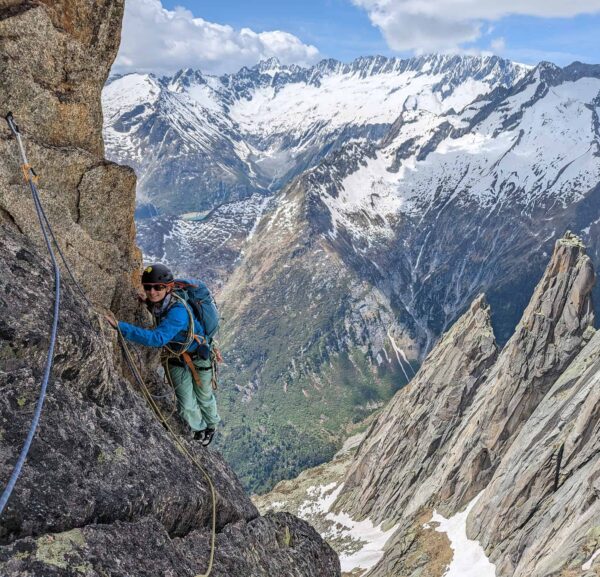
Ridge climbing in alpine terrain | Säntis rock-climbing course with practical outings
Experience exposed rocky ridges and learn how to scramble safely – your gateway to alpine terrain.TechnicsEnduranceDaily, date on request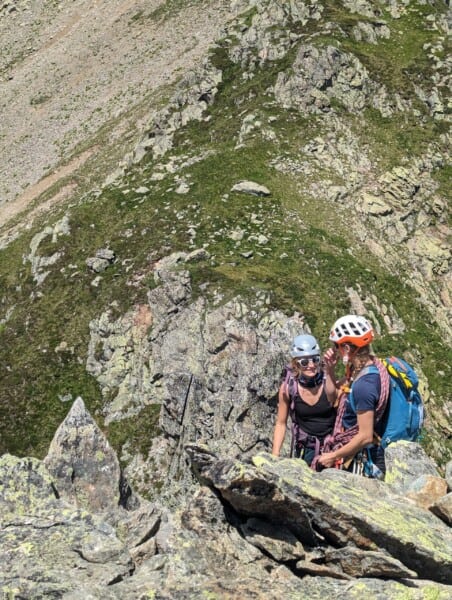
Säntis, Appenzell
Climbing Tour | Crossing the Rosenlouwistock and Tannenspitze with a mountain guide
A varied alpine traverse: wonderful scrambling, exposed sections and two or three abseil points make this day trip a special adventure.TechnicsEnduranceDaily, date on request
Advanced multi-pitch course Eastern Switzerland | Refresher and application tour with mountain guide
Safety, routine and fun in the vertical. You will consolidate your knowledge and become an independent multi-pitch climber!TechnicsEnduranceDaily, date on request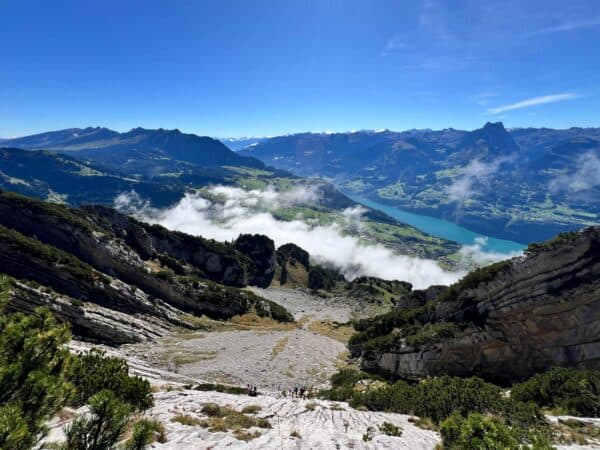
Mattstock & Brüggler, Eastern Switzerland
High tour | Sustenlochspitz with mountain guide
Airy ridge climbing in an alpine setting!TechnicsEnduranceDaily, date on request
Susten Pass
Climbing Tour: Gross Mythen Traverse | Adlerspitzli & Wysswändli
Lonely, wild and full of views. Along hidden paths and enjoyable climbs to the striking Schwyz landmark.TechnicsEnduranceDaily, date on request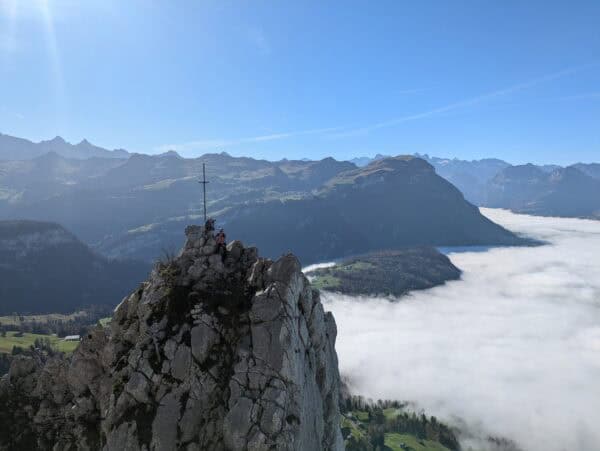
- Download more offers!
Possible private tours with us:
Climbing tour | Fergenkegel south face with mountain guide
Alpine insider tip in the Silvretta! Enjoy alpine climbing on the striking Gneisturm tower nestled in the wild landscape of the Silvretta.TechnicsEnduranceTo the offerDaily, date on request
Fergenkegel
Climbing tour | Zervreilahorn north-east ridge with mountain guide
Enjoyable climbing in the best rock on the beautiful summit of the Zervreilahorn - combined with a fantastic view, alpine ambience and a touch of adventure.TechnicsEnduranceTo the offerDaily, date on request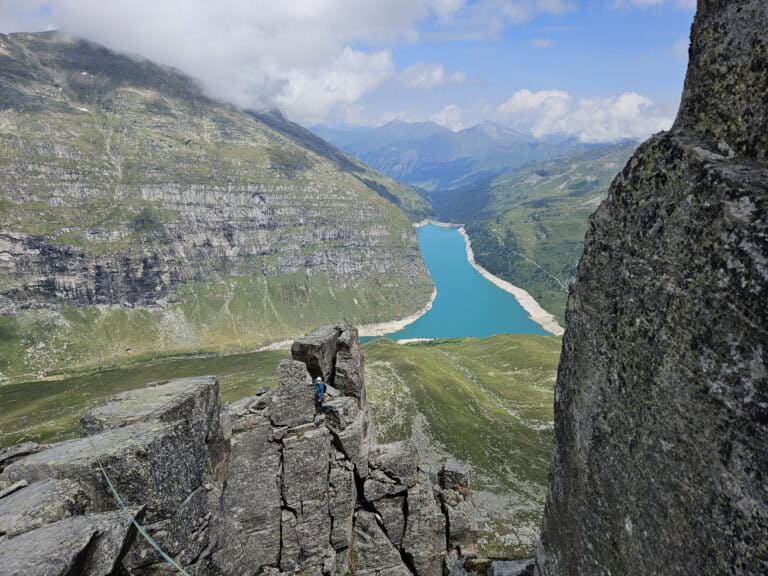
Cervrei maple
Cleanclimbing | crack climbing coaching Göscheneralp with mountain guide
Crack climbing, placing mobile anchors and solid trad craftsmanship – catapult yourself to the next level in clean climbing!TechnicsEnduranceTo the offerDaily, date on request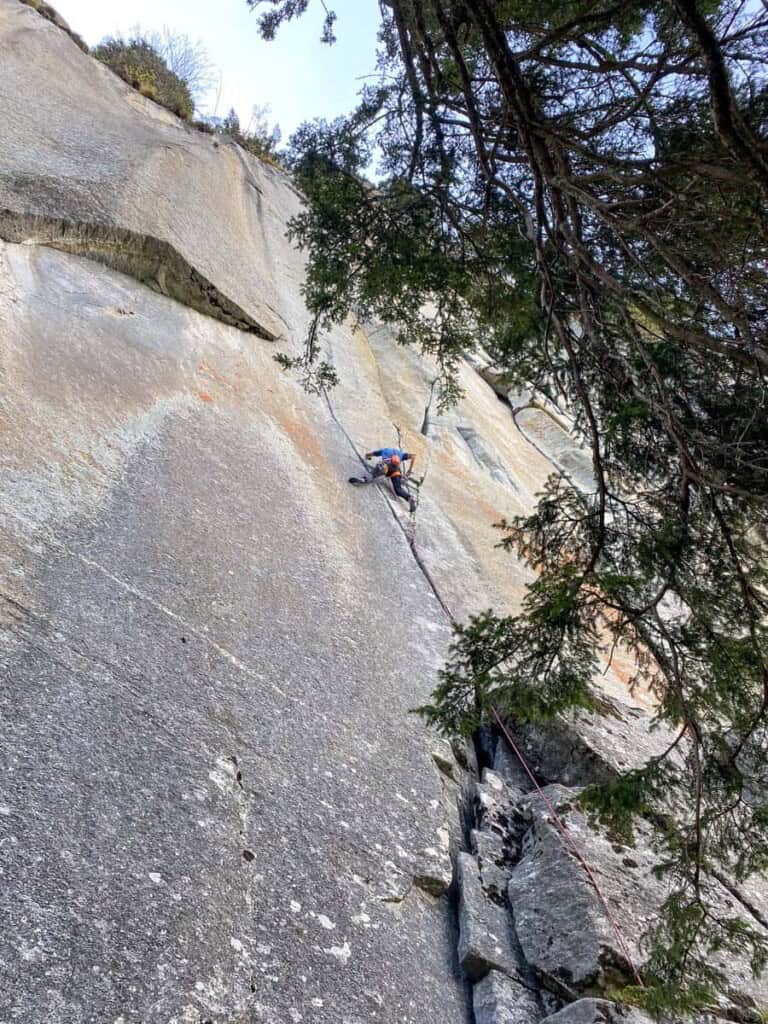
Göscheneralp
Climbing tour | Motörhead, the classic multi-pitch in the Grimsel region with a mountain guide
Motörhead in Eldorado - a granite classic with cult status! Enjoy the legendary classic by the Remy brothers and savour the fantastic rock and varied climbing. Friction, cracks and intersections, it's all there!TechnicsEnduranceTo the offerDaily, date on request
Motörhead
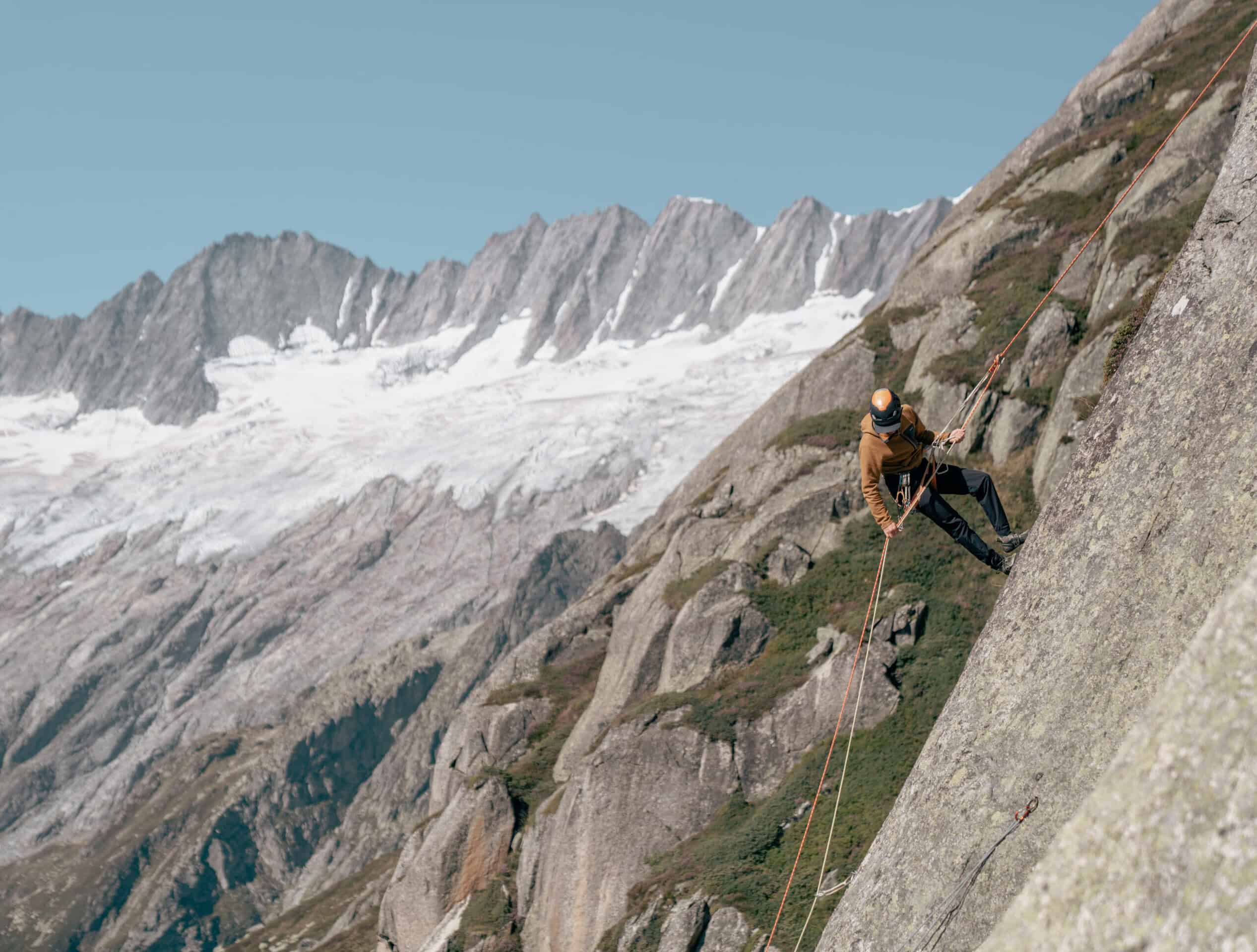
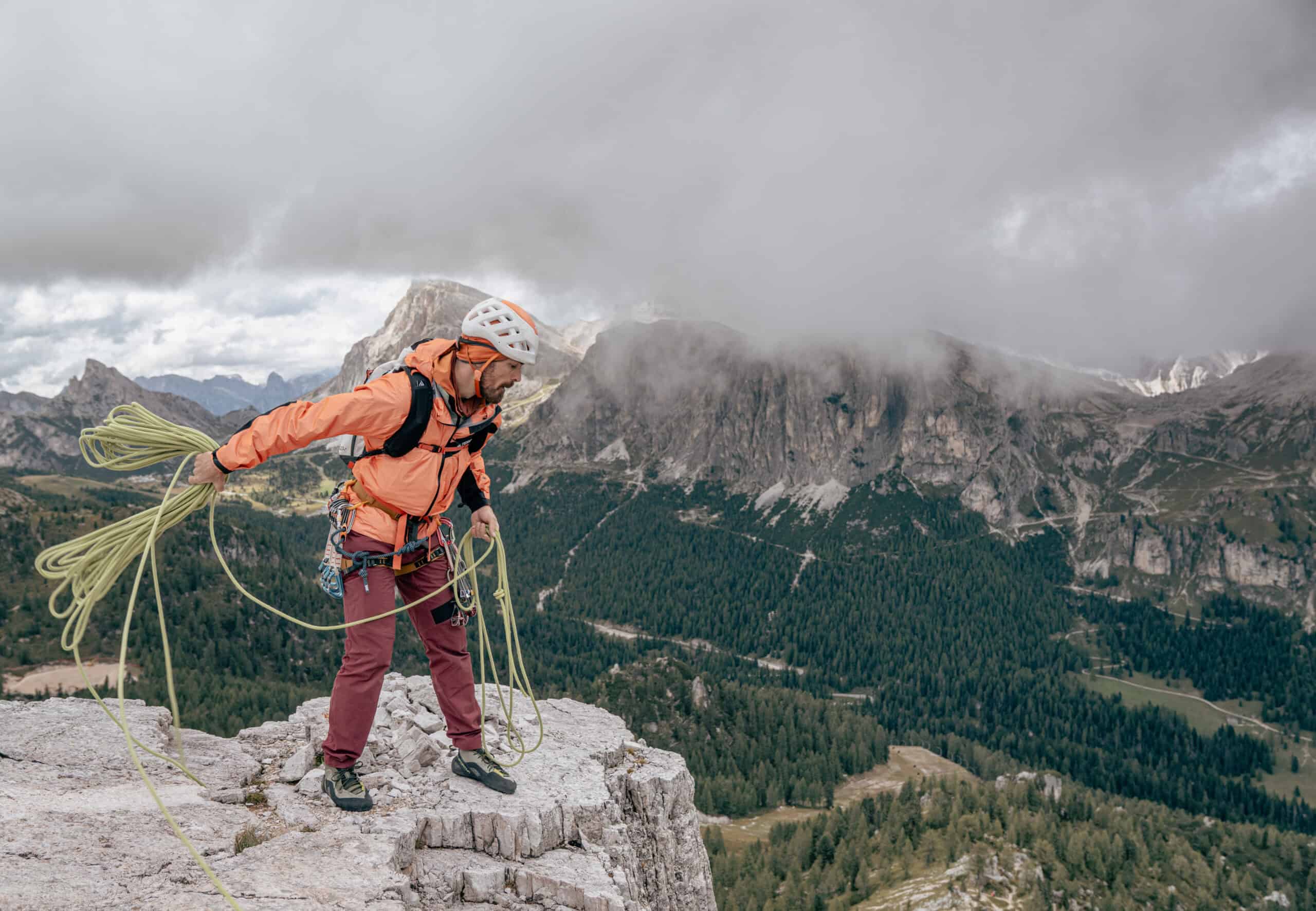
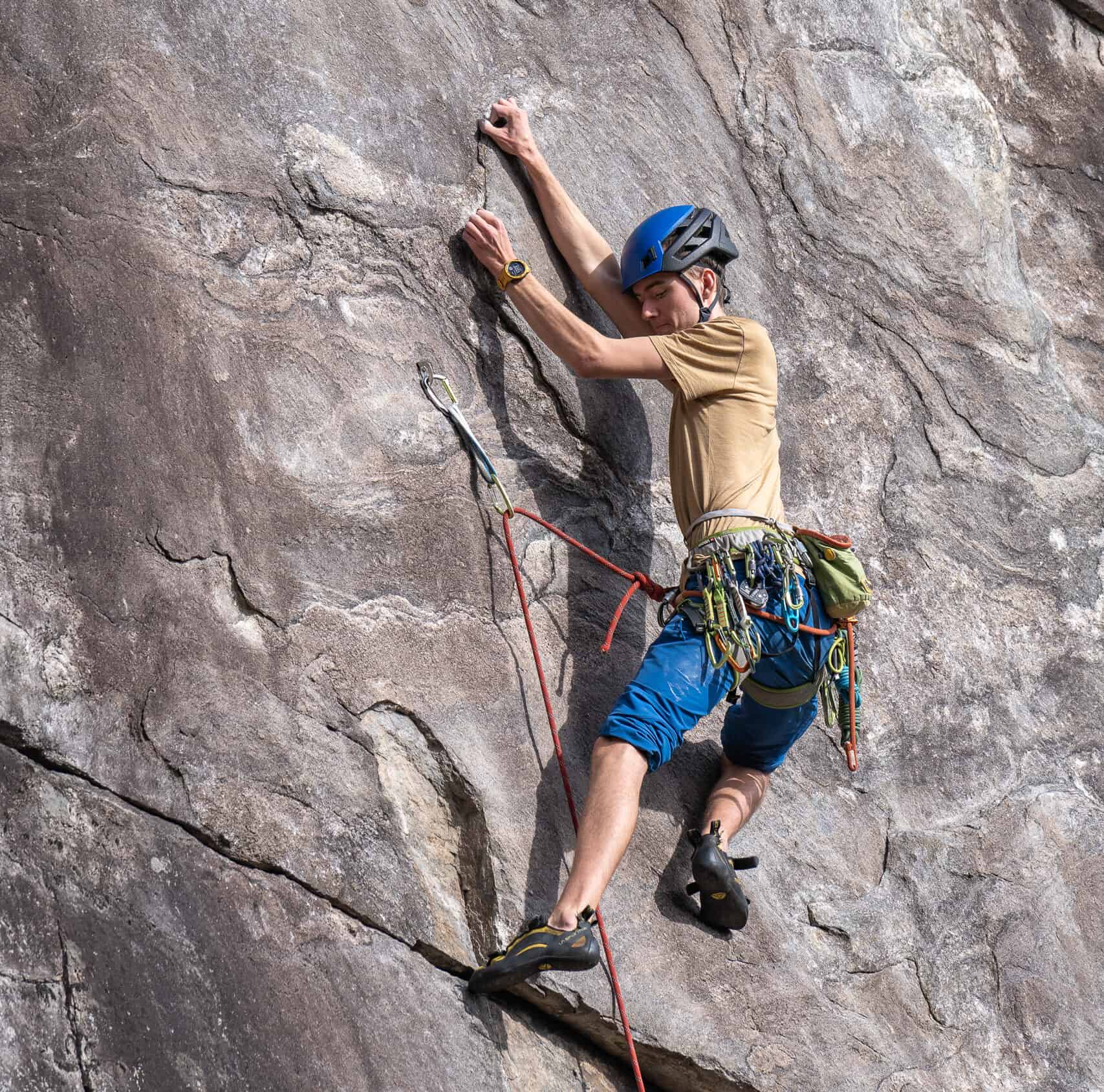
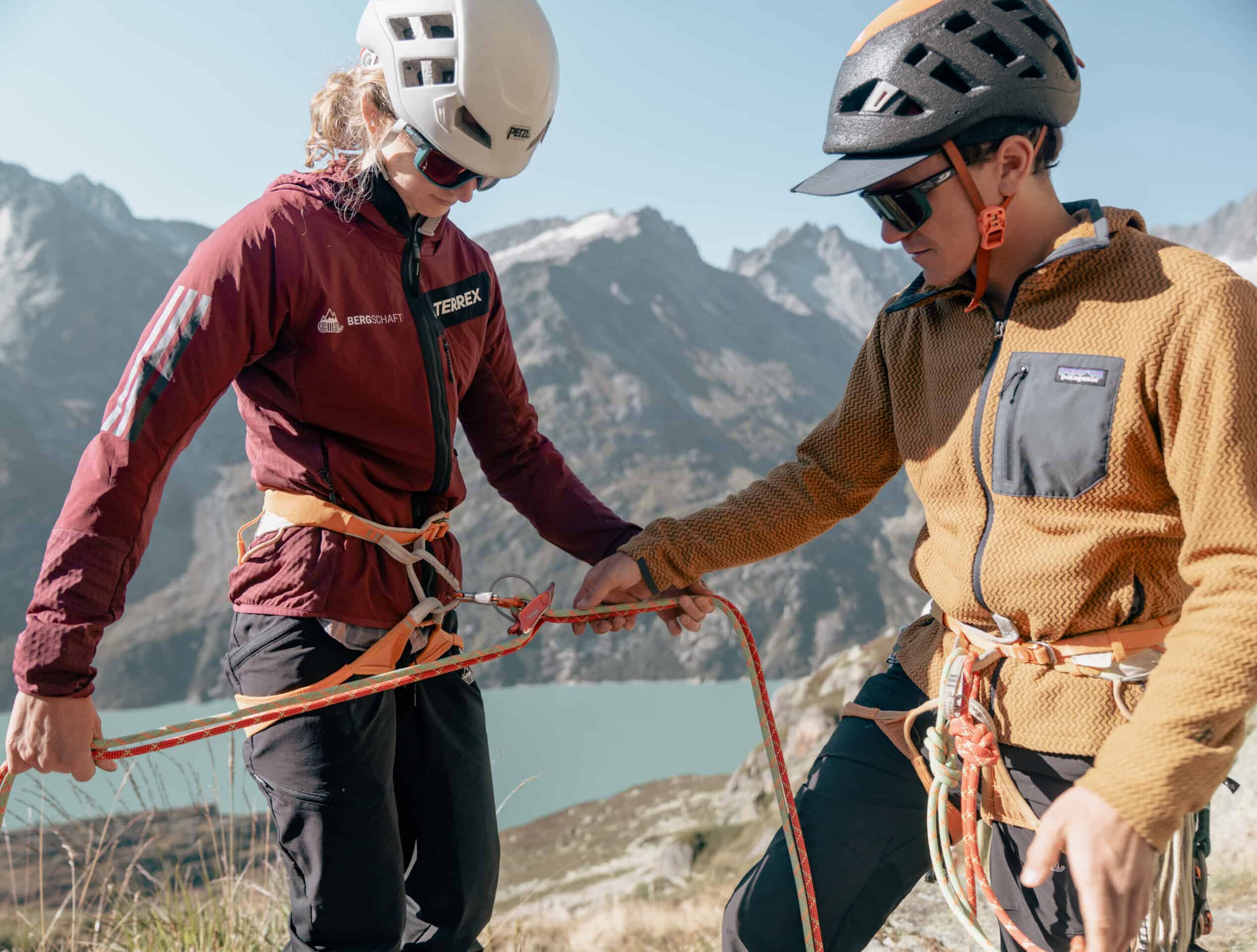
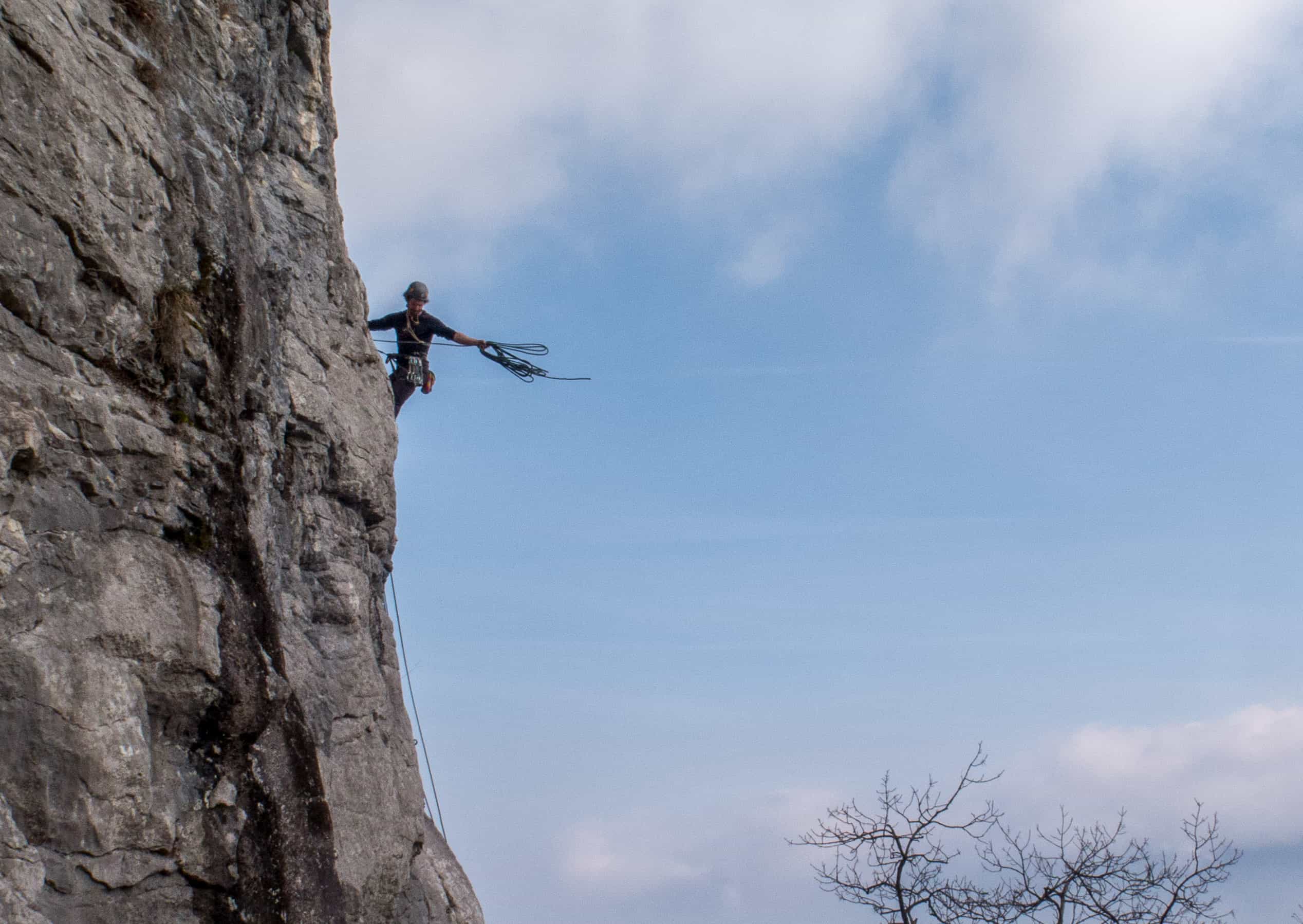
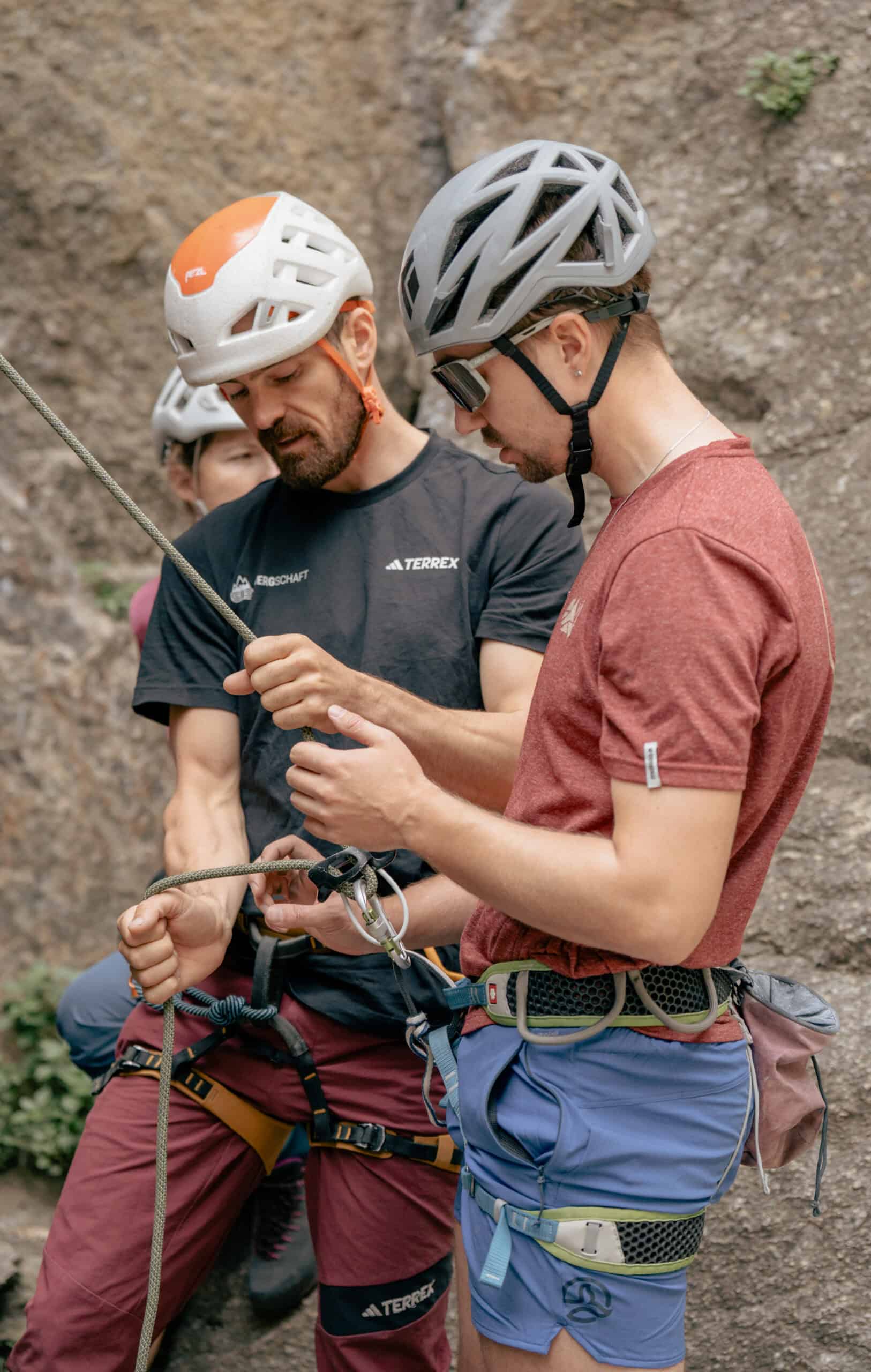
Scenes from rock climbing – rugged rock, sunshine and the perfect flow





Interested in other tours?
Take a look at the complete offerNothing that suits you?
Do you prefer to travel in your own group? Book a private tour with us and enjoy and benefit from our professionals on the mountain.
Here we answer some of your questions about climbing ?¿
General
What types of climbing are there?
Common forms of climbing are sport climbing indoors or on rocks, alpine climbing or multi-pitch climbing and bouldering. Special forms of climbing are ice climbing, deep water soloing and the increasingly popular variant of via ferrata. Extreme forms of climbing are free solo climbing, speed climbing, big wall climbing and mixed climbing.
Here you’ll find a A lovely description of the different types of climbing.
What is sport climbing?
Sport climbing is climbing with a rope on well-established routes. Sport climbing routes have only one rope length, so they are 15-40m high. This can be done outdoors and indoors in all the new climbing gyms.
What is the difference between climbing and bouldering?
Strictly speaking, bouldering is a form of climbing. Namely, that on blocks at jumping height, typically a few metres high. However, climbing is often used as rope climbing, i.e. sport climbing, and bouldering, the playful climbing on blocks.
What is Clean Climbing or Trad Climbing?
Trad Climbing (Traditional Climbing), or Clean Climbing, is a purist type of climbing. It does without artificial and permanent fixed points such as bolts. The routes are secured traditionally, i.e. with friends (clamping devices), wedges and, if necessary, pitons. One must Cover yourself. Granite and gneiss with its beautiful parallel cracks are particularly suitable for trad climbing. Well-known places for trad climbing are the Dolomites in South Tyrol, Great Britain and especially America with the "Nose". You will learn how to belay yourself, place friends correctly and learn placements for the different belay devices in our climbing courses and tours!
What is climbing without a belay/rope called?
Free Solo Climbing is very well known from the film "Free solo" with Alex Honold. The belay points and the rope are completely dispensed with. One mistake leads to certain death. Only very few climbers do this extreme form. Free climbing is not to be confused with free solo. Free climbing simply means climbing with pure muscle power and what the rock offers us. In addition, when free climbing, you are secured with a rope. You do not use the rope or other aids to climb the wall or the route. The rope is merely the reinsurance. Aid climbing or artif climbing (artificiel) is completely different. Technical climbing. There you use rope ladders, squats and much more to somehow get up the wall. Often the difficulties of the wall are too high to climb, at least for ordinary mortals.
How dangerous is bouldering?
Since bouldering involves climbing without a rope at jump height, the risk of sprained ankles and the like is relatively high. Of course, in some cases "jump height" is a very elastic term, and highballs were created. In other words, fairly high boulders on which you should definitely not fall any more. But this is again the extreme form. In normal bouldering, to avoid stupid falls, you use mats that you bring yourself and spot each other so that you can land in the right position. The spotters do not catch the falling person, but prevent the impact on the back or head. More to mock can be found here.
How does rock climbing work?
In rock climbing – that is, sport climbing on natural rock – you choose walls that are typically 15 to 40 metres high, which you can ascend in a single pitch. These are often very well equipped, meaning there are bolts into which you clip your quickdraws yourself. Unlike indoor climbing, you need more equipment. As well as a longer rope than you’d use indoors, you’ll need quickdraws and self-belay slings to thread the rope at the belay station. Here you’ll find our courses, where you can learn to climb rocks.
How does alpine climbing or multi-pitch climbing work?
In alpine climbing and multi-pitch climbing, the aim is to climb an entire face or to reach a summit via that face. So, unlike in sport climbing, where you climb just one pitch, you link together a whole series of pitches to form a multi-pitch route. To do this safely, a secure belay station is set up after each pitch. The second climber follows, and then the party moves on to the next pitch. In this way, the rope team ascends the face from belay station to belay station. For the descent, it is sometimes necessary to abseil. Such a Multi-pitch climb can also be done in the high mountains, as part of a Alpine Tour, far above the glacier.
How do you climb lead?
The first person in a rope team must climb in the lead. This means that the rope is not yet hooked in and the lead climber(s) hooks the rope into the respective intermediate belays, into the express slings during the climb. One person is required to climb the lead both indoors and outdoors on the rock.
What is Toprope Climbing?
Toprope is climbing on a rope that is already hooked in. The rope therefore always comes from above, i.e. from the top, and you therefore do not have to climb in the lead. In the toprope you are well secured and you cannot fall. When climbing multiple pitches, the person in the second ascent also has the rope from above and climbs the respective pitch in the second ascent also in the toprope. If the same person always climbs a multi-pitch, the second person is always secured with the rope from above.
What climbing areas are there?
There are numerous, beautiful, spectacularly located and good-grip climbing areas. Many are described in climbing guides and there are also numerous "secret" spots that are only passed on by word of mouth. Popular regions and places are:
- the classics from Jura,
- the limestone cliffs of Näfels, Glarus and Weesen,
- the long limestone walls near the Säntis,
- the Bergell in the Engadine,
- the granite from the Gotthard, Uri, Furka,
- the sport climbing areas of Engelberg, Pilatus, Melchsee-Frutt and
- the granites from the Valais near Zermatt, Saas Fee and
- especially the Martigny region.
- Not forgetting the granites of Chamonix, which also extend into Switzerland, into the Trent region.
Literature can be found at the Filidor, at the SAC and in various Portals.
Where is climbing done in (nearby) foreign countries?
Outside Switzerland, the following countries and regions are very popular for climbing holidays:
- France (Corsica with its tafoni),
- Italy (Finale, Sardinia, Tuscany),
- Croatia,
- Spain (Mallorca) and
- Greece.
Long walls and alpine tours can be found
- in the Dolomites and
- in Chamonix (Mont Blanc Massif).
How is the difficulty of a route indicated?
In Switzerland, climbing routes are mostly given in French difficulty grades (5a, continuing with 5b, 5c, then 6a, etc.). But there is also the UIAA scale with Roman numerals (6a is about VI). There are also scales for the overall difficulty of a route (WS, ZS, S,...), how well the route is secured and how well it can be secured, i.e. with friends and wedges on trad routes. An overview of the Difficulty scales can be found here and a somewhat more complete listing here.
Equipment and material
Do I need my own kit for rock climbing?
To get started, all you need are climbing shoes, a climbing harness and a helmet, as well as comfortable sportswear. If you don’t have your own kit, you can often hire it from your local mountaineering shop. We work in partnership with Sport Trend Shop Hinwil. You can hire certain items here. If you have your own kit, bring it along so you can practise using your own equipment.
You can’t hire any equipment from us.
What equipment do you need for sport climbing?
For sport climbing you need climbing fins, a nice long rope, express slings, harness, belay device and a helmet. That's all you really need. Something delicious to eat, enough water and a bialetti or a hammock for cosiness and you'll have a great day on the rock. You will find details here.
How many "exes" does one need?
Exes (also express slings, expresses) are two snap carabiners sewn to a webbing sling and are needed for belaying while climbing (more about exes). Often you need 10 to 14 pitons for one rope length. Each route is different in length and has a different number of pitons. The climbing guides describe how many pitons you need for each route.
Which climbing shoes are best suited to rock climbing?
For long days on the rock or multi-pitch routes, we recommend a comfortable shoe with a slightly stiffer sole, which will give you good grip even on small footholds. Bouldering shoes with extremely high forefoot flex are usually too uncomfortable for your first sessions on the rock, but they’re well worth it once you start climbing more ambitiously and want to tackle higher grades.
Climbing techniques and courses on offer
What are the entry requirements for a rock climbing course?
That depends on the course in question. For our beginner courses („From the Indoor Climbing Centre to the Crag“), it’s enough if you can climb and belay safely on top rope indoors. For advanced courses, you should already have experience of lead climbing. You’ll find the exact requirements in the description of each course.
Which climbing tours are worthwhile with a mountain guide?
Worthwhile climbing tours with a mountain guide is, for example, the "Chico Mendez" Zuestoll (~6b). Alpine approach, magnificent view of Lake Walen and a beautiful summit. Also very rewarding and somewhat easy, but all the longer for it, is the traverse of the Kreuzberge in the Säntis Massif (max. V, often easier). Breezy, alpine and a magnificent landscape reward you. The routes on the Salbit or Furka with their super granite (from 5b) can also be highlighted here. However, the tours in the Trient area are still a highlight. Beautiful red granite high above the sea of glaciers. A must for all nature lovers, available in all difficulty levels. You are always welcome to contact us with your wishes, our mountain guides are sure to find the right route for you, or take a look in the Climbing activities.
What are the climbing techniques?
There are numerous forms of movement and techniques to get up a rock face like this. It is crucial to get to know your body and, with a lot of practice, to automate the different forms, to recognise the required technique in the respective places and to be able to call it up. It is a large repertoire of movements that you have to acquire. We teach you the different techniques in our courses with suitable exercises. Here you will find the Principles and a very Detailed list of climbing techniques.
How do you get better at climbing?
The best training for climbing is the climbing itself. You need to enjoy the movement and have the curiosity to solve new problems. Supplementary strength training, mega tight climbing fins and excessive taping of fingers may look crass, but only really brings something in the very high climbing grades (from 8a). You should therefore enjoy the sport as much as possible. The best way is to use a Technical trainings to strengthen the awareness for the movements and then to go climbing actively, i.e. always with the technique inputs in mind, and to implement them actively. You can find an exciting article here. Also useful is the book "Vertical Secrets" by Peter Keller and "9 out of 10 climbers make the same mistakes" by Dave MacLeod. It also helps to simply observe other climbers and analyse their movements. It is exciting to analyse the professionals on YouTube.
How do I climb properly?
Efficiently climb out of the legs. Place the feet precisely on the toes so that you can lift most of the pull from the legs. The feet should be under the body's centre of gravity during the pull and after the pull, in the pause, apart so that the body's centre of gravity is between the feet. Try to hang on the wall with your arms stretched out as long as possible. This will save you strength. Only pull with the arm where necessary. Try to load crosswise, i.e. when the left arm pulls, the right foot should push. Otherwise you will have an "open door" and you will turn out. You can stop this rotation with the "flag".
You should definitely learn how to turn in as early as possible in your climbing career.
How often do I need to climb to improve?
To get to a level of 7a, it is enough to climb regularly once a week. If you want to achieve more and you are completely hooked, 2-3 climbing sessions per week are a good order of magnitude. Make sure to vary the training sessions, so bouldering one time and rope climbing the next.
How do you train for climbing?
You should start with the foot technique, with precise standing. This is the most important thing. The movement must come from the legs. After that, it makes sense to start in a Climbing technique training to learn the different forms of movement. Only from the high grades onwards do specific finger strength and maximum strength exercises make sense.
What happens if the weather isn’t on our side when we’re climbing outdoors?
We and our mountain guides are flexible! If the weather is bad at our planned destination, we often head to sunnier, drier climbing areas in Switzerland (e.g. Ticino or Valais). If outdoor climbing isn’t possible at all, we’ll work with you to find a suitable solution. If the course or tour can’t go ahead at all, we’ll be happy to issue you with a voucher or refund your money.
Do you have any other questions?
If you have any further questions or would like to chat with us, please feel free to contact us. You can find our contact details here.